Why Your Hands Slip on the Mat but Your Feet Never Do
Quick Answer: Your palms have a much higher concentration of sweat glands than the soles of your feet get used at, and in downward dog your hands carry load at a forward angle that turns any moisture into a shear force. Feet stay planted because they bear weight more vertically and press into the mat with more surface area. The fix is managing palm moisture, not buying a grippier mat.
It is one of the more annoying puzzles in a home practice: your feet are welded to the mat and your hands are sliding toward the front of it, one inch per breath.
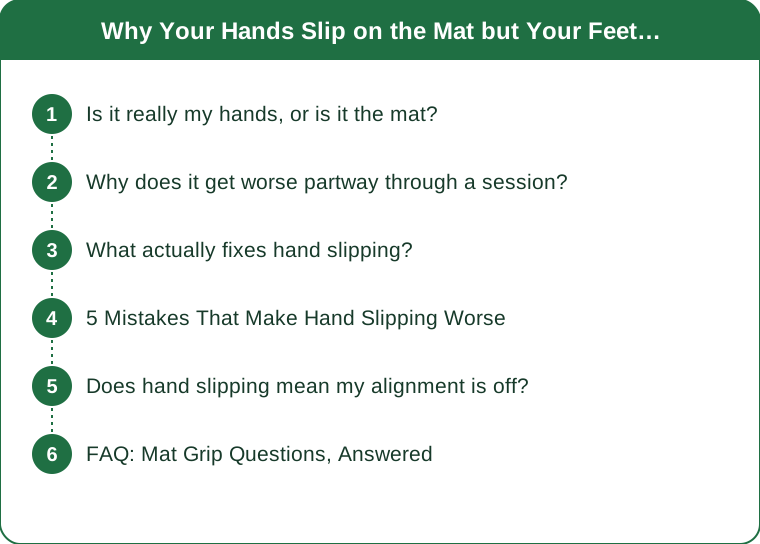
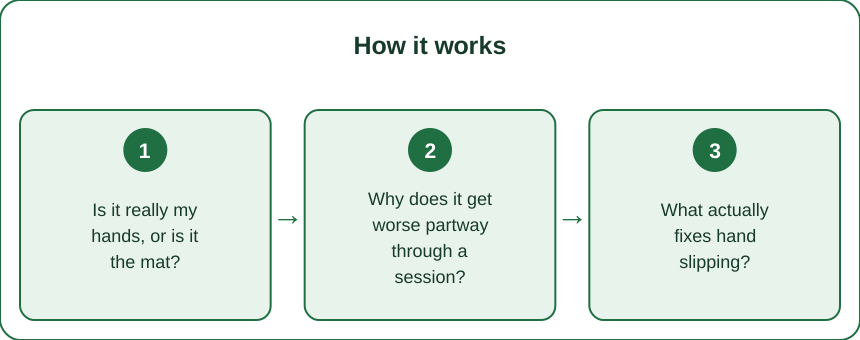
Is it really my hands, or is it the mat?
Almost always your hands. The clue is right there in the asymmetry — if the mat surface were the problem, your feet would slip too.
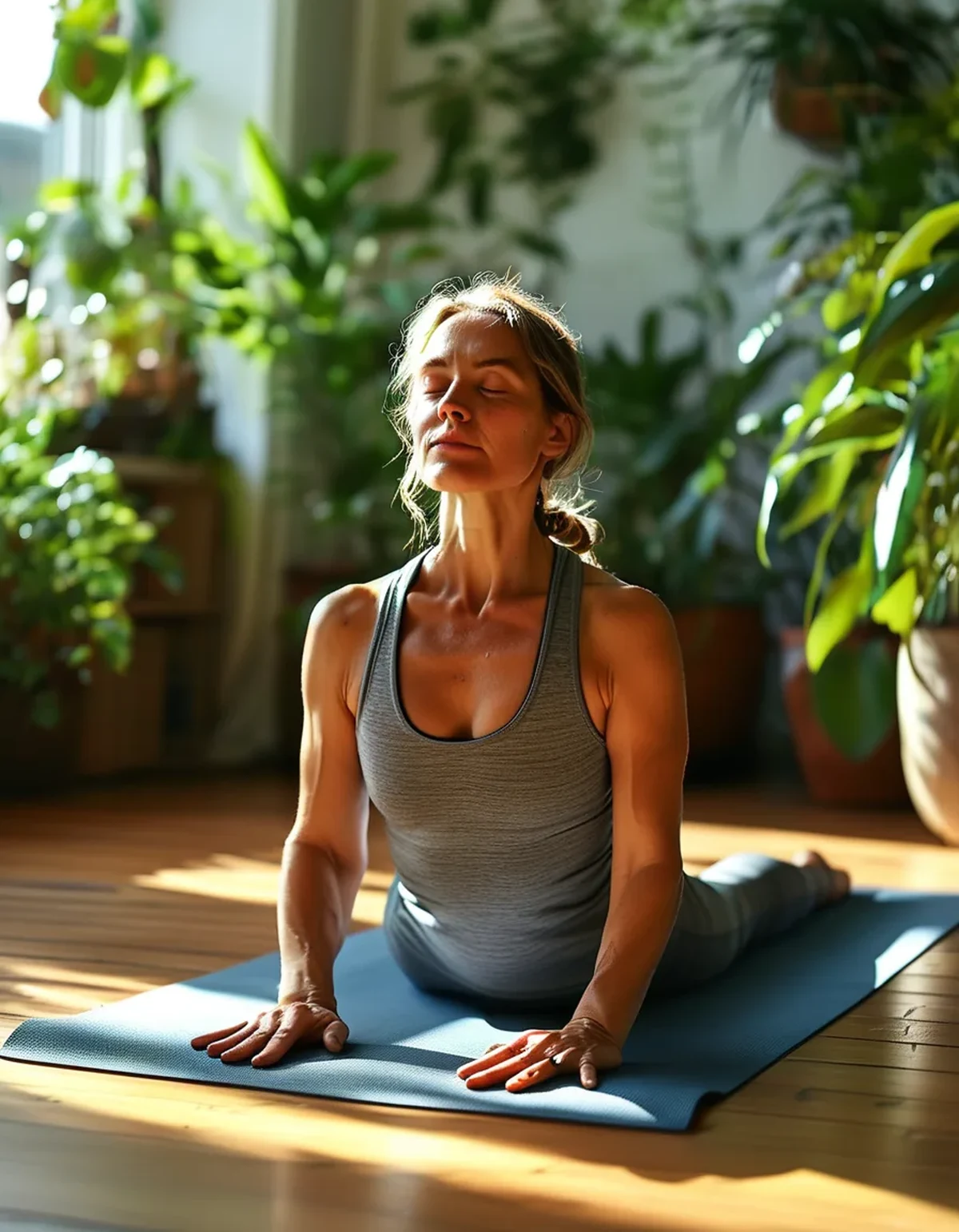
Palms and soles both have eccrine sweat glands at very high density, but the way they are loaded differs completely. In downward dog your hands take weight at an angle, pushing forward and down at the same time. Any film of moisture between skin and mat becomes a lubricant under a shear load, which is exactly the condition that produces sliding.
Your feet, meanwhile, are pressing down more vertically with a much larger contact area, and often with more calluses. Same moisture, entirely different physics.
Why does it get worse partway through a session?
Because palm sweating tracks with two things: core temperature and nervous system activation. Both climb in the first ten to fifteen minutes of a practice.
That is why the first downward dog is fine and the fourth one is a slip-and-slide. It is also why it can be worse in a class you find challenging than in a longer, easier one — anxiety and effort both trigger palmar sweating independently of how hot you are.
A related pattern: many people find grip gets worse in cool rooms too, because a cold mat surface encourages condensation while your hands stay warm. Grip problems are not purely a hot yoga phenomenon.
What actually fixes hand slipping?
In rough order of how well they work:
- Dry the hands before the practice, not during. A quick wash with soap and a thorough dry removes skin oils and lotion residue, which matter as much as sweat.
- A small hand towel at the top of the mat. Placed under the hands in downward dog, it absorbs film continuously. This is the highest-impact, lowest-cost fix and most studios have towels for exactly this.
- Spread the fingers wide and grip with the fingertips. Pressing through the base knuckles and the pads of your fingers rather than the heel of the palm changes the force direction and dramatically reduces slide.
- Rosin or grip chalk. Small amounts on the palms. Effective, but check studio rules first.
- A mat with a moisture-activated top layer. Some surfaces genuinely grip better when damp, which inverts the problem. This is a real category, not marketing, but it is the most expensive fix and it should not be your first move.
What generally does not work: wiping your hands on your leggings mid-flow, which just moves the moisture around.
5 Mistakes That Make Hand Slipping Worse
1. Lotion before practice. Even hours before. Hand cream leaves a residue that survives a rinse and makes any mat slick.
2. Cleaning the mat with too much soap. Residue left in the texture creates a slippery film once your hands warm it up. Rinse and wipe with plain water afterward.
3. Placing your hands too far forward in downward dog. The further forward your hands, the more of the load is shear rather than compression, and the more you slide. Walk them back an inch.
4. Ignoring the towel because it looks like cheating. A towel is standard equipment in most hot yoga rooms for a reason.
5. Buying a new mat first. The third mistake surprises people, but this is the expensive one — most slipping problems follow you onto the new mat, because the variable that changed was never the mat.
Does hand slipping mean my alignment is off?
Sometimes, and it is worth checking before you spend money.
If you slide specifically in downward dog, look at where your hips are. Hips too low pushes weight forward into the hands and increases the forward shear. Lifting the hips higher and shifting weight back toward the legs reduces hand load substantially, and many people find the slipping stops entirely.
Similarly, in plank, sliding often means the shoulders have drifted well forward of the wrists. Stacking shoulders over wrists puts the load vertically through the hand rather than pushing it forward.
So before you conclude the mat has failed, take two poses and check the geometry. If your slipping is worst in exactly the poses where your alignment is loosest, you have your answer.
FAQ: Mat Grip Questions, Answered
Does a new mat need breaking in for hand grip?
Many rubber mats have a factory film that takes several sessions or a good wipe-down to wear off. If a brand new mat is slick everywhere, including under your feet, that is the film, not your hands.
Do grip socks help with hand slipping?
No, but grip gloves exist and work on the same principle. Most people find a towel simpler and cooler.
Is antiperspirant on the palms safe?
Some people use it and it does reduce palmar sweating. Check with a pharmacist or physician first, especially if you have sensitive skin. This is general information, not medical advice.
TL;DR:
- Hands slip and feet do not because palms take load at a forward angle, turning moisture into shear
- It worsens mid-session as core temperature and nervous system activation both rise
- The highest-value fixes are a clean, dry, lotion-free hand and a small towel at the top of the mat
- Spread the fingers and press through the fingertips rather than the heel of the palm
- Check your downward dog geometry before buying a new mat — hips too low is a common cause
The grippiest mat in the world cannot out-engineer a film of moisture. Solve the hand and almost any decent mat works.
See It in Motion
Keep Reading
This article is for general informational and styling purposes only. Fit, sizing, and product availability may vary.