What Yoga Mat Weight and Density Numbers Actually Tell You
Quick Answer: Weight is the most useful single number on a mat listing - it is a proxy for density, and density predicts both grip and durability better than thickness does. A 5mm mat that weighs 5.5 lbs is a serious mat; a 5mm mat that weighs 2 lbs is foam that will compress and slide. Thickness alone tells you almost nothing.
You are comparing two mats. Both say 5mm. One is $30 and one is $90, and the listings offer thickness, a material name, and a lot of adjectives.
The number that would actually differentiate them is sitting right there in the shipping details, and almost nobody uses it.
Here is how to read a mat spec sheet in about a minute.
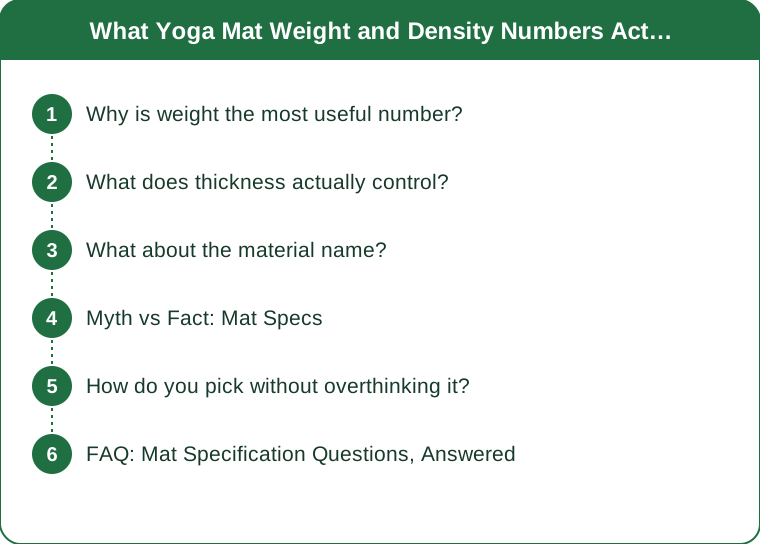
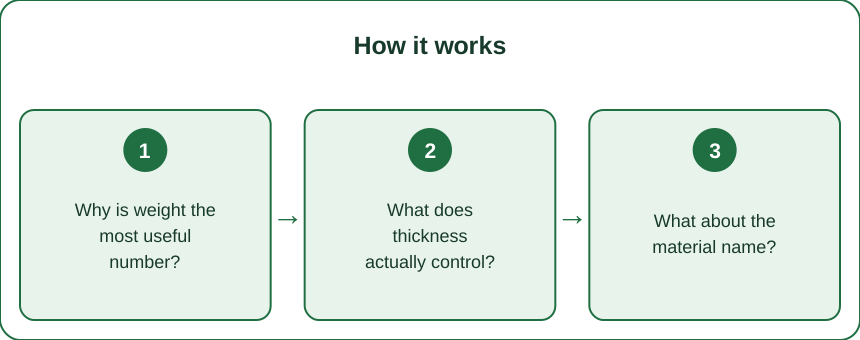
Why is weight the most useful number?
Because at a given thickness, weight is density, and density is what determines how a mat behaves.
A dense mat compresses less under your hands and knees, which means your hand does not sink and shift when you press into it. It also resists permanent compression - the dents that develop where your feet go in downward dog.
The practical benchmarks for a standard-size mat:
- Under 2.5 lbs: travel or lightweight foam. Fine for its purpose, poor grip and cushioning.
- 3-4 lbs: typical mid-range mat. Adequate for gentle practice.
- 5-7 lbs: dense studio mat. Excellent grip and durability, not fun to carry.
- Over 7 lbs: premium rubber, essentially a home mat. Superb stability, effectively immovable.
If a listing does not state weight, the shipping weight is usually close enough to be informative.
What does thickness actually control?
Cushioning and stability, and they trade against each other:
- 1-2mm: travel mats. Almost no cushioning, maximum ground feel and stability. Excellent over carpet, brutal on knees.
- 3-4mm: the standard. Enough cushioning for most bodies, enough stability for balance work. If you do not know what you want, this is it.
- 5-6mm: more joint cushioning, noticeably less stable in standing balance poses. Good for sensitive knees, restorative, and pilates.
- 8mm+: these are exercise mats rather than yoga mats. Balance poses become genuinely difficult.
The common mistake is buying thick for comfort and then struggling with every standing pose. If knee comfort is the goal, a 4mm mat plus a folded blanket where you need it beats a 6mm mat everywhere - targeted cushioning rather than global instability.
What about the material name?
Material sets the ceiling on grip and durability, and the categories behave predictably:
- Natural rubber. Best grip, especially when damp. Heavy, has a distinct smell for the first weeks, degrades in prolonged direct sunlight. The default for serious practice.
- PVC. Very durable, easy to clean, grip depends heavily on the surface texture. Less grippy when wet. The classic studio mat.
- TPE. Lightweight, recyclable, moderate grip, compresses faster than rubber. A reasonable middle option.
- Polyurethane top layer over rubber. The best wet grip available and the reason these mats are popular for hot yoga. Absorbs moisture, which means it also absorbs everything else and needs real cleaning.
- Cork. Grip improves when damp, naturally antimicrobial, tends to be firm. Excellent for sweaty practice, less cushioning.
Material plus density together predict almost everything. Material alone predicts less than people assume - a low-density rubber mat is worse than a high-density PVC one.

Myth vs Fact: Mat Specs
Myth: Thicker mats are better for beginners. Fact: Thick mats make balance harder, which is the opposite of what a beginner needs. 4mm is the friendlier starting point.
Myth: A textured surface means better grip. Fact: Texture helps dry grip and does little for wet grip. Wet grip comes from the material’s surface chemistry, which is why polyurethane and rubber outperform textured PVC when you sweat.
Myth: Heavier always means better. Fact: Heavier means denser at a given thickness, which is usually better - but a mat you never bring to class because it is 8 lbs is worse than a 4 lb mat you use.
Myth: The smell means the mat is toxic. Fact: New rubber mats have a strong natural smell that fades over weeks. It is characteristic of the material, not an indicator of harm.
Myth: Price tracks quality closely. Fact: Above about $60, you are largely paying for material and brand rather than performance. Below $30, the density is usually the compromise.
How do you pick without overthinking it?
Three questions:
Do you sweat a lot? Yes means natural rubber or a polyurethane top layer, and it means grip is the deciding factor over everything else.
Do you carry it anywhere? Yes caps your weight at about 4.5 lbs, which caps your density, which means accepting a grip compromise. Consider two mats - a heavy one at home and a light one for class. Two decent mats often cost less than one premium one.
Do your knees complain? Yes means 5mm, or 4mm plus a blanket. The blanket approach is genuinely better and most people never try it.
That is the whole decision. Everything else - color, alignment lines, brand - is preference, and alignment lines in particular are useful for about three months and then invisible.
FAQ: Mat Specification Questions, Answered
How long should a mat last?
A dense rubber or PVC mat used four times a week lasts three to five years. A lightweight foam mat at the same usage shows permanent compression within a year. Density is the variable.
Does a heavier mat grip the floor better?
Yes, meaningfully. Mat slide on hardwood is largely a weight problem, which is why the light travel mat that slides everywhere is not a defect - it is physics.
Is a 6mm mat bad for standing poses?
Not bad, just less stable. If your practice is mostly floor-based or restorative, the extra cushioning is worth more than the stability you give up.
TL;DR:
- Weight is the most informative number on the listing, because at a given thickness it means density.
- 5-7 lbs is a serious mat. Under 2.5 lbs is a travel mat regardless of what it claims.
- Thickness controls cushioning versus stability. 4mm is the default; 5-6mm trades balance for knees.
- Wet grip comes from material chemistry, not surface texture - rubber and polyurethane win.
- 4mm plus a folded blanket beats a 6mm mat for knee comfort without costing you stability.
Mat listings quote the number that is easiest to print, not the one that predicts how the mat behaves. Check the weight, decide on cushioning, and match the material to how much you sweat - that is the entire specification.
See It in Motion
Keep Reading
This article is for general informational and styling purposes only. Fit, sizing, and product availability may vary.