How You Store Your Yoga Mat Between Sessions Is Quietly Degrading It
Quick Answer: Storing a yoga mat tightly rolled with the textured grip side facing inward for extended periods, or leaving it in direct sunlight or a hot car, accelerates material breakdown and grip loss faster than the mat’s actual usage would — rolling grip-side-out and storing in a cool, shaded spot preserves both texture and structural integrity considerably longer.
Most yoga mat care advice focuses on cleaning products, while storage habits between sessions are doing just as much, if not more, to determine how long a mat’s grip actually lasts.
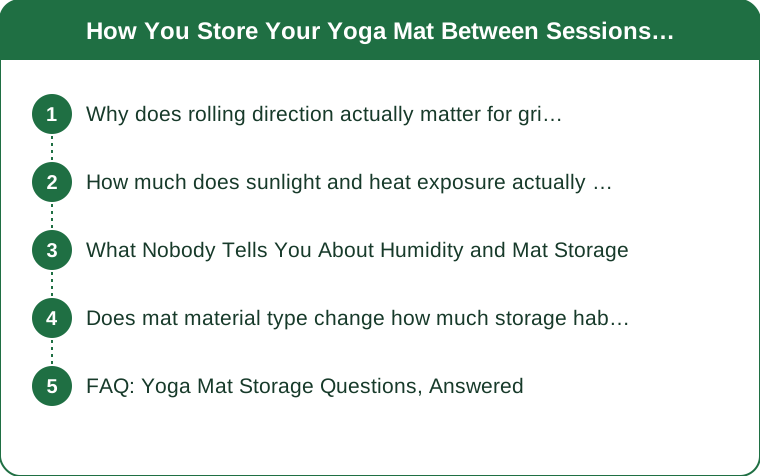
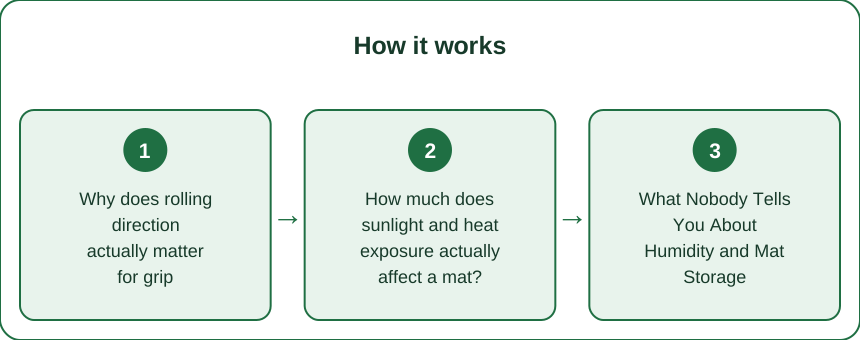
Why does rolling direction actually matter for grip longevity?
Because rolling with the grip side facing inward creates sustained pressure creases across the textured surface, which can compress and smooth out the very texture responsible for the mat’s grip over repeated rolling cycles. Rolling grip-side-out distributes this pressure onto the smoother back side instead, protecting the texture that matters most for performance.
How much does sunlight and heat exposure actually affect a mat?
Significantly more than most people expect — UV exposure and heat accelerate the breakdown of rubber and foam materials common in yoga mats, causing the material to become brittle, discolored, or to lose its tacky grip qualities considerably faster than a mat stored in a cool, shaded spot. A mat left in a hot car trunk for even occasional stretches can show this degradation noticeably sooner than one always stored indoors.
What Nobody Tells You About Humidity and Mat Storage
Storing a slightly damp mat rolled tightly, without letting it fully air dry first, can trap moisture that leads to material breakdown or odor issues over time, distinct from the sunlight and rolling-direction factors — always allowing a mat to fully dry unrolled before rolling it back up for storage prevents this specific and commonly overlooked issue.
Does mat material type change how much storage habits matter?
Yes — natural rubber mats are generally more sensitive to heat, sunlight, and moisture-related degradation than synthetic PVC or TPE mats, meaning natural rubber mat owners specifically benefit from being more deliberate about storage conditions, while synthetic mats have somewhat more tolerance, though still benefit from the same good habits.
FAQ: Yoga Mat Storage Questions, Answered
Is a yoga mat storage bag or strap actually helpful, or does it not matter?
A breathable storage bag protects against dust and light exposure during transport and storage, though it should still allow the mat to be fully dry before enclosing it to avoid trapping moisture.
Does hanging a mat vertically work better than rolling it for storage?
Hanging (over a bar or hook, unrolled or loosely rolled) can work well and avoids repeated tight-roll pressure creases entirely, making it a reasonable alternative for those with the storage space for it.
How often should a yoga mat actually be replaced regardless of storage care?
Even with ideal storage and care, most mats show meaningful grip and texture decline after one to two years of regular use, though good storage habits can extend that considerably compared to poor storage practices.
TL;DR:
- Rolling grip-side-in creates pressure creases that compress the very texture responsible for grip
- Sunlight and heat exposure accelerate material breakdown significantly faster than normal use alone
- Always let a mat fully air dry before rolling it up to avoid trapping moisture during storage
- Natural rubber mats are more storage-sensitive than synthetic PVC or TPE alternatives
Rolling direction and storage spot matter as much as cleaning habits for how long a mat’s grip actually lasts.
See It in Motion
Seen here: Super High Waist Embossed Yoga Leggings with Inner Pocket — shop it on bubblelime.com
Keep Reading
This article is for general informational and styling purposes only. Fit, sizing, and product availability may vary.