Stacking Two Yoga Mats: Genuinely Useful or Just Unstable?
Quick Answer: Stacking works well for kneeling and floor-based practice, where the extra cushioning genuinely protects joints, and works badly for standing and balance work, where the compressible layers let your foot sink and rock. The best compromise is a folded second mat used only under the knees rather than a full second layer, which gives the cushioning where you need it and leaves your standing surface firm.
It is not one decision. It is two different surfaces for two different halves of a practice.
We have covered mat thickness for sensitive knees, mat versus towel and double-sided textures. This is the version using what you already own.
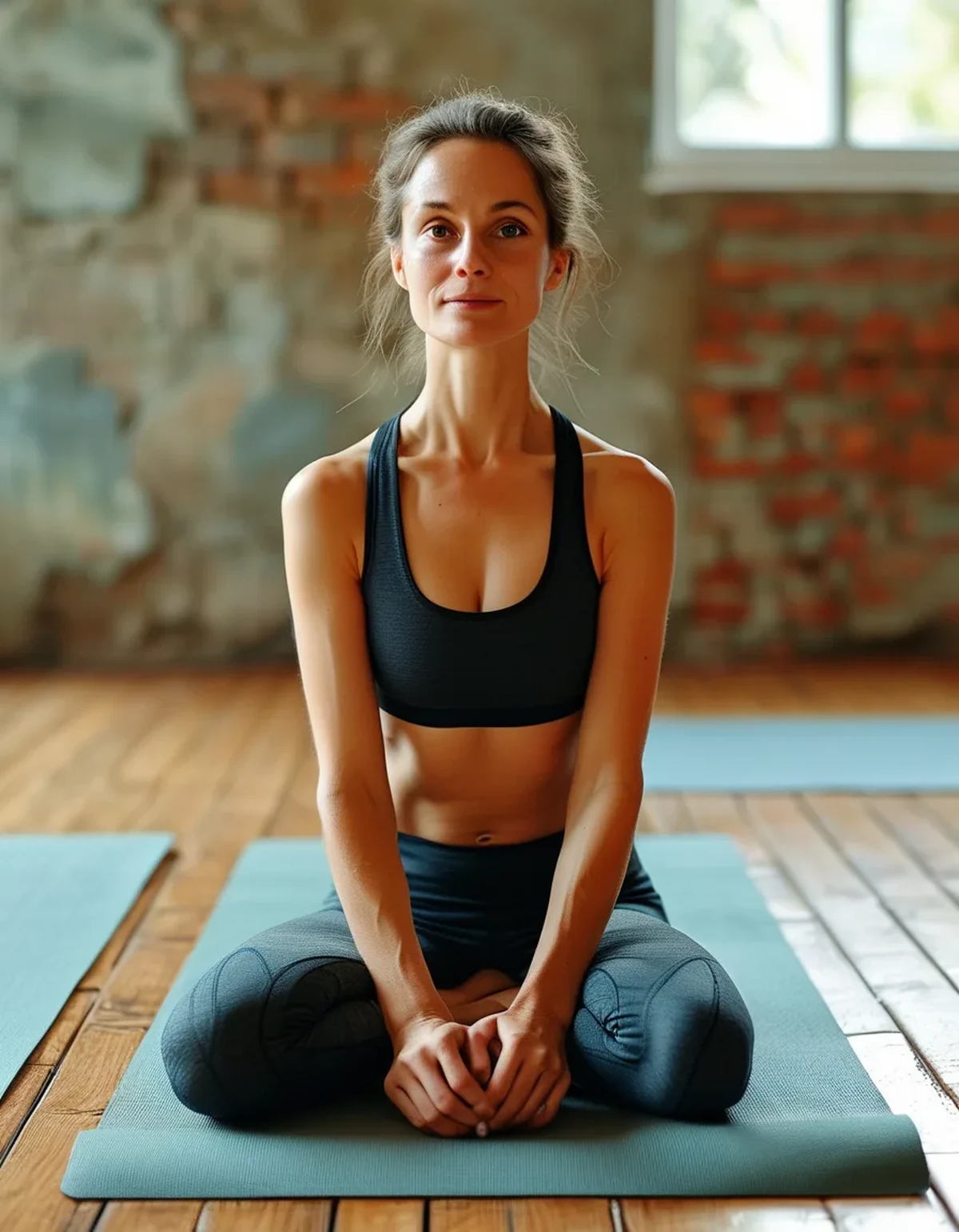
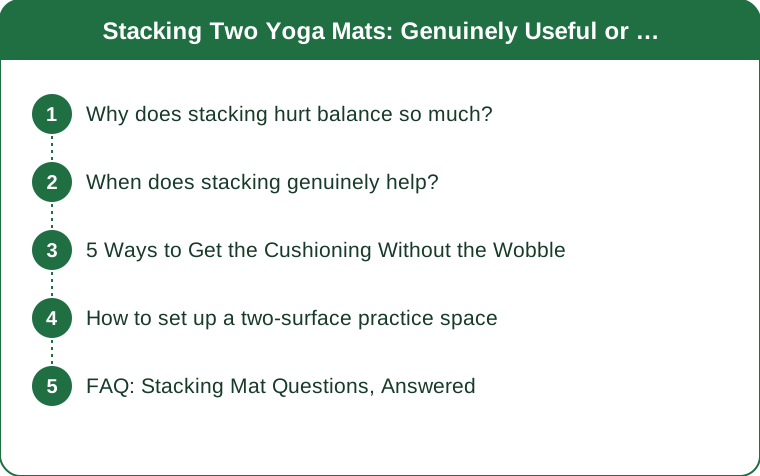
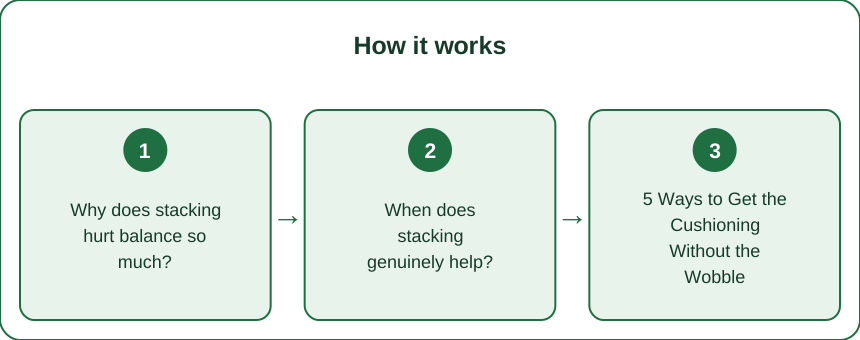
Why does stacking hurt balance so much?
Because balance depends on the ground being predictable, and two compressible layers are not.
Standing balance relies on rapid feedback from the foot. Pressure changes at the sole tell you which way you are drifting, and the correction happens before you consciously notice.
Foam delays and blurs that signal. A thicker, softer surface means the foot sinks further before the pressure registers, and the information arrives late.
Two layers compress unevenly. The top mat can shift on the bottom one, so the surface moves under load in a way that a single mat does not.
Which produces a specific sensation: balances that were fine last week feel wobbly, and the wobble is lateral rather than front to back.
Ankle stabilisers work harder, which is not automatically bad and is genuinely tiring across a full practice.
And the effect scales with total thickness. Two four-millimetre mats behave differently from a single eight-millimetre one, because the interface between them is a slip plane that does not exist in a solid mat.
When does stacking genuinely help?
Whenever the priority is joint protection rather than ground feedback.
Kneeling work is the clearest case. Low lunges, camel, kneeling sequences and anything with the kneecap loaded on a hard floor benefit substantially from more cushioning.
Restorative and yin practice. Long holds on a hard floor become uncomfortable through pressure rather than effort, and the extra layer removes that limit.
Practice on tile, concrete or a wooden floor over concrete. These surfaces have essentially no give, and a single thin mat does very little.
Anyone with sensitive knees, hips or a bony frame. Where pressure discomfort is the limiting factor in a practice, extra padding directly extends what is possible.
Floor-based physiotherapy or rehabilitation work, which is usually done lying or kneeling and rarely involves standing balance.
And cold floors. Two mats insulate substantially better than one, which is a real consideration once autumn arrives and you are practising on a ground-floor room in the morning.
5 Ways to Get the Cushioning Without the Wobble
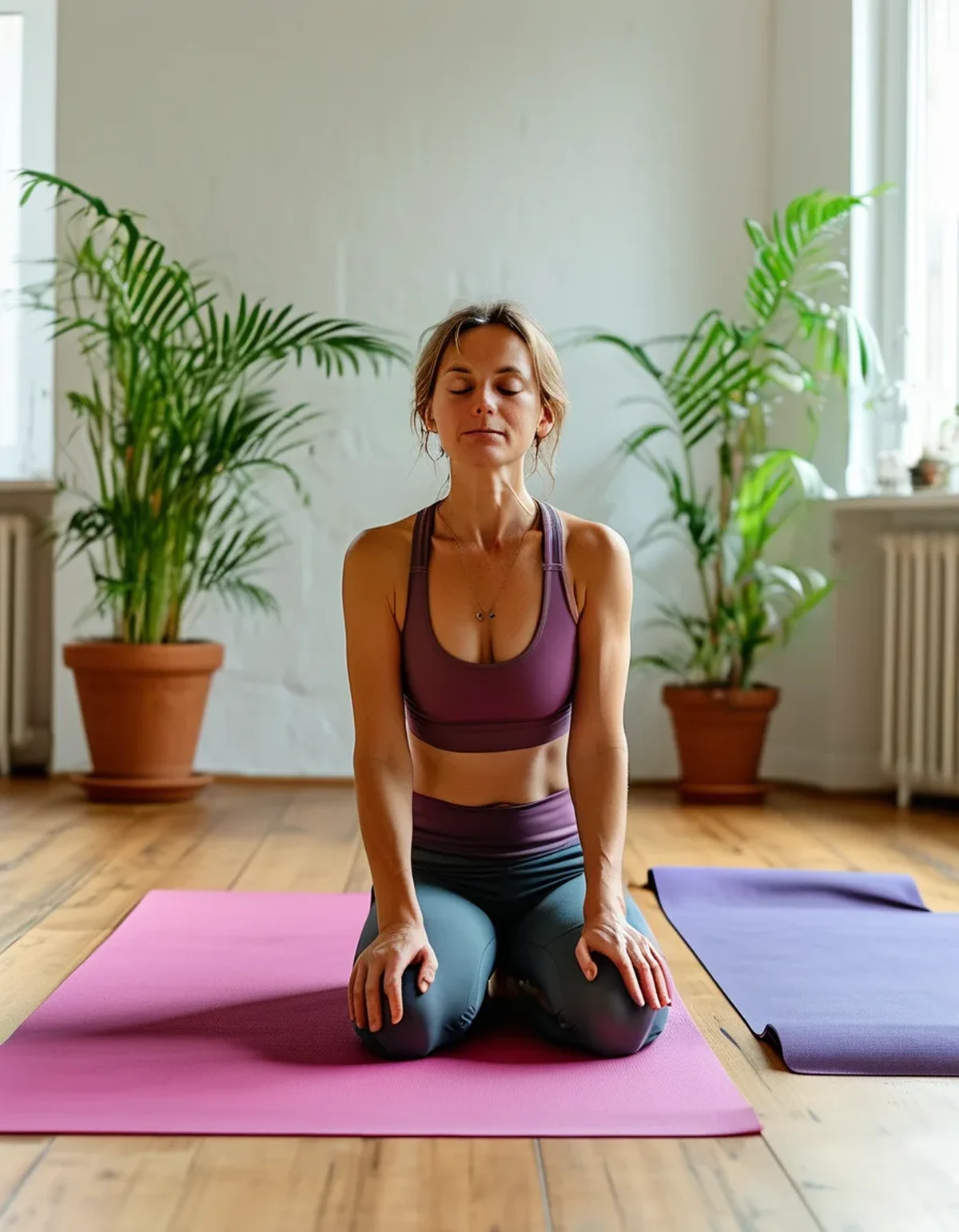
Option one: fold the second mat and use it only under the knees. This is the best answer for most people. Full cushioning where you kneel, firm ground where you stand, and it takes two seconds to move.
Option two: use a proper knee pad instead. A dedicated pad is denser and more stable than a folded mat and does not slide, and it costs less than a second mat.
Option three: fold a blanket rather than a mat. A folded wool or cotton blanket compresses less unpredictably than foam and does not create a slip plane between two rubber surfaces.
Option four: stack only for floor-based sessions. If today’s practice is yin, restorative or floor-based mobility, stack the whole thing. If it includes standing balance, do not.
Option five: put the grippier mat on top and the denser one underneath. If you are going to stack, the top mat should be the one with the best surface grip and the bottom one the firmest, which minimises both slipping and sinking.
And the one to avoid: stacking two identical soft mats for a full flow practice. That is the combination that produces the most instability for the least benefit, and it is the one people default to because it uses what is in the cupboard.
How to set up a two-surface practice space
Six practical arrangements.
Keep the second mat folded at the top of the first, where you can drag it under your knees without breaking flow.
Fold it in quarters rather than halves. Quarters gives roughly four times the thickness in a pad the right size for two knees, which is what you actually want.
Use the firmest mat as the base always. The base mat determines how much the whole stack moves; a soft base with a firm top is the worst configuration.
Check the grip between the two mats. Some rubber surfaces slide against each other alarmingly. A textured underside on the top mat helps, and a thin non-slip rug underlay between them solves it entirely.
Keep a folded blanket for hips and shoulders separately. Different joints want different heights, and one uniform layer is a compromise for all of them.
And test standing balance before committing to a stacked practice. Thirty seconds in tree pose tells you whether today’s arrangement is workable, and it is quicker than discovering it halfway through.
One note about long-term storage: leaving one mat stacked and compressed under another for weeks flattens the lower one permanently, particularly with softer foam mats. If you stack regularly, roll and store them separately, or rotate which one goes on the bottom.
This is general information, not medical advice. Persistent knee pain during kneeling is worth having assessed rather than only padding around.
FAQ: Stacking Mat Questions, Answered
Is it bad to use two yoga mats at once?
Not for floor and kneeling work, where the extra cushioning genuinely helps. It is a poor choice for standing balance, because two compressible layers create a slip plane and blur the pressure feedback from your feet that balance depends on.
What is the best way to add cushioning for sensitive knees?
A folded second mat or a dedicated knee pad used only where you kneel. This gives full cushioning at the knee while leaving your standing surface firm, which is better than a full second layer under the whole practice.
Does a thicker mat make balance harder?
Yes, measurably. Softer, thicker surfaces delay the pressure feedback from the sole of the foot, so corrections happen later. Some people use this deliberately as balance training, but for learning a new balance pose a firm surface is easier and more informative.
TL;DR:
- Stacking helps kneeling, restorative and floor work; it undermines standing balance.
- Two mats create a slip plane and blur the foot pressure feedback that balance depends on.
- The best fix is a folded second mat under the knees only, not a full second layer.
- Firm mat on the bottom, grippy mat on top, and store them separately so the base does not flatten.
You do not need one surface for the whole practice. You need cushioning where you kneel and firmness where you stand.
See It in Motion
Seen here: High Waist Embossed Yoga Leggings with Side Pockets — shop it on bubblelime.com
Keep Reading
This article is for general informational and styling purposes only. Fit, sizing, and product availability may vary.