What Actually Happens to Your Yoga Mat When You Take Practice Outdoors
Quick Answer: Outdoor surfaces are less even and more abrasive than studio floors, so a mat used outdoors regularly benefits from a slightly thicker, more durable material to handle uneven ground and grit, and should be cleaned more frequently since dirt and moisture from grass or sand work into the mat’s surface texture in ways indoor use doesn’t.
An indoor studio floor is flat, clean, and predictable. Grass has bumps and moisture. Sand gets into every texture groove on a mat’s surface. Concrete or pavement is abrasive in a completely different way. Taking your regular mat outside without accounting for any of this shortens its life fast.
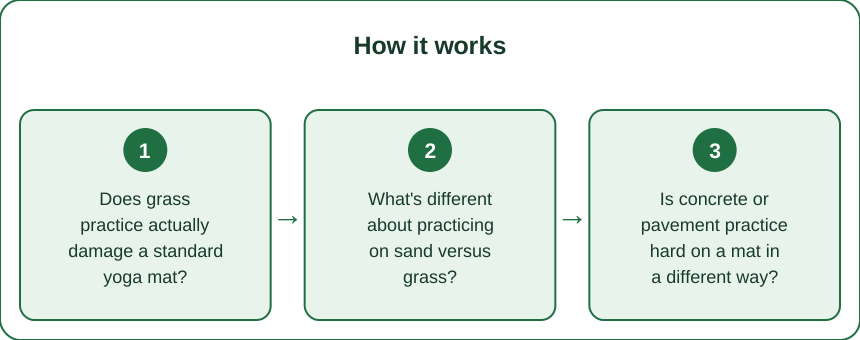
Does grass practice actually damage a standard yoga mat?
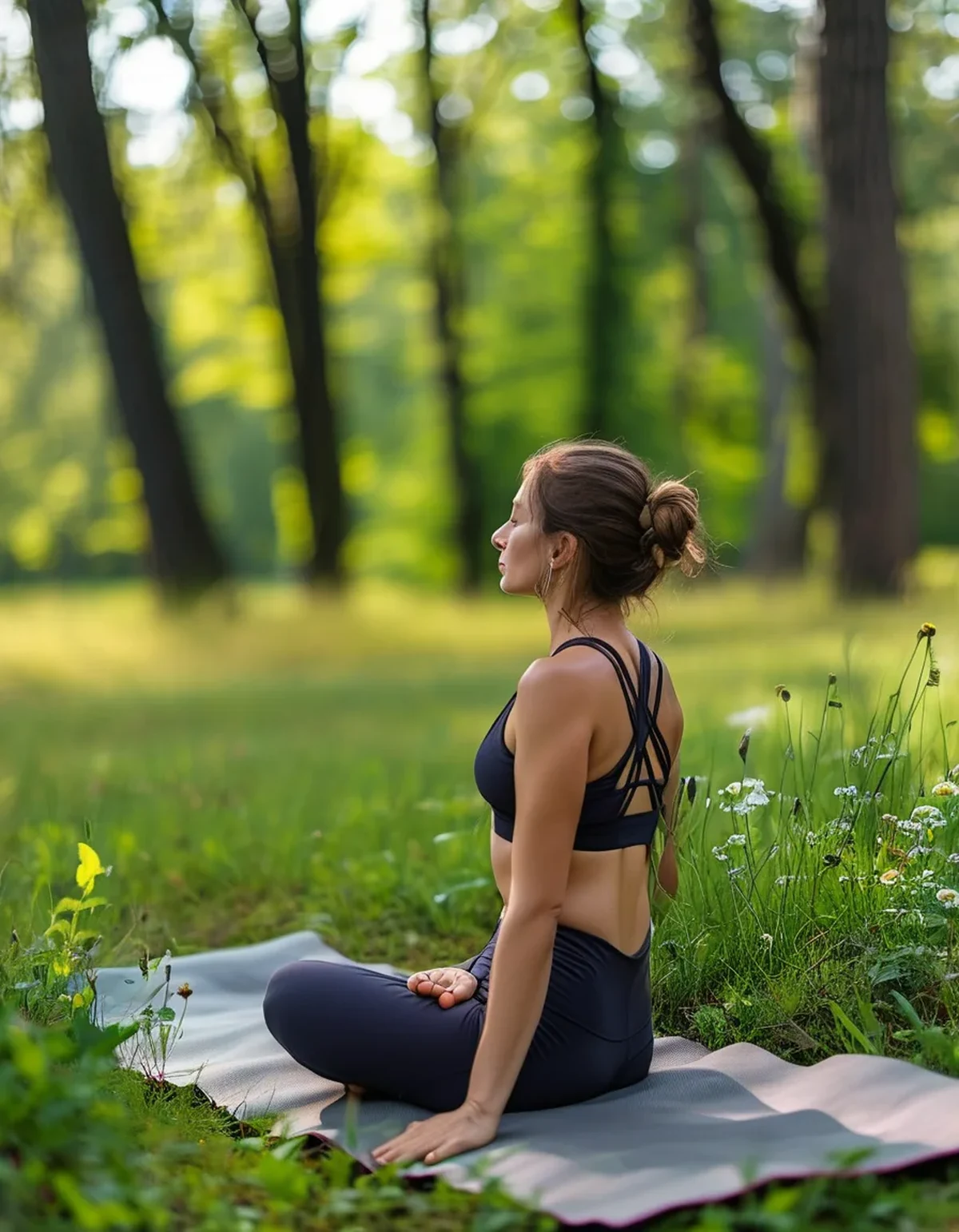
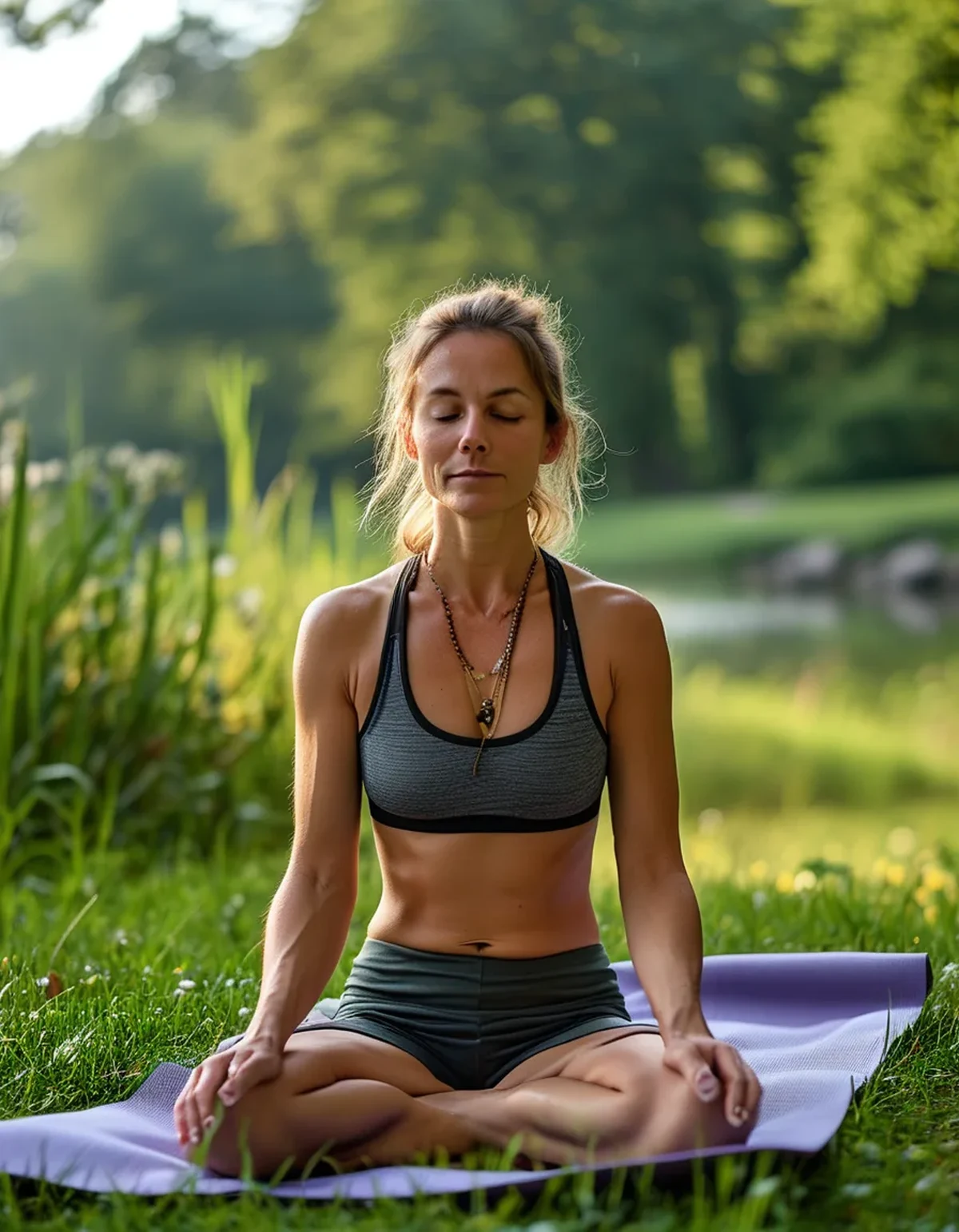
Not damage exactly, but grass introduces moisture and organic debris that can work into a mat’s surface texture and, if not cleaned promptly, contribute to mildew or odor issues over time — a mat that’s fine after one outdoor session on dry grass can develop problems if used repeatedly on damp grass without being cleaned and fully dried between uses.
What’s different about practicing on sand versus grass?
Sand is more abrasive against a mat’s surface and tends to work its way into any textured grip pattern, which can gradually degrade the surface texture that provides grip in the first place — sand also makes the underlying surface inherently less stable than grass, so a slightly thicker mat that adds a bit more cushioning and stability against the uneven, shifting surface is genuinely useful for regular beach or sand practice.
Is concrete or pavement practice hard on a mat in a different way?
Yes — hard, abrasive surfaces like concrete increase wear on the mat’s bottom surface specifically, since there’s no give in the ground to absorb any of the friction from movement, unlike grass or sand which have some natural cushioning. A mat with a more durable bottom layer holds up better to regular concrete or pavement use than a lightweight, minimal-bottom mat designed primarily for studio floors.
What Nobody Tells You About Mat Choice for Regular Outdoor Practice
If outdoor practice happens more than occasionally, owning a separate ‘outdoor mat’ — distinct from a primary studio or home mat — is a genuinely practical choice, not an unnecessary expense. Outdoor conditions accelerate wear in ways indoor use doesn’t, and having a dedicated mat that can take that wear means your primary mat (used for indoor, cleaner conditions) lasts significantly longer without the compounded stress of grit, moisture, and UV exposure.
FAQ: Outdoor Yoga Mat Questions, Answered
Should I clean my mat differently after outdoor use compared to indoor use?
Yes — a more thorough cleaning (not just a quick wipe) that removes grit and any organic debris, followed by full air drying before storage, matters more after outdoor sessions than after typical indoor practice.
Does UV exposure from outdoor sun actually degrade a yoga mat over time?
Yes — repeated direct sun exposure can degrade some mat materials over time, causing brittleness or fading, which is part of why storing a mat away from direct sun between outdoor sessions helps extend its usable life.
Is a thicker mat always better for outdoor practice?
Generally more helpful for uneven or abrasive surfaces like grass and sand, though very thick mats can slightly reduce stability for balance poses — a moderate thickness increase, rather than the thickest option available, is usually the practical sweet spot for outdoor use.
TL;DR:
- Grass introduces moisture and debris that can cause odor or mildew if not cleaned and dried promptly
- Sand is abrasive and can degrade a mat’s surface grip texture faster than other surfaces
- Concrete wears down the mat’s bottom layer due to the lack of natural ground cushioning
- A dedicated outdoor mat protects your primary mat from accelerated wear Outdoor practice is genuinely worth the mental reset, but treating your studio mat like it can handle every outdoor surface the same way is how a favorite mat ends up wearing out years ahead of schedule.
See It in Motion
Seen here: Round Neck Long Sleeve Athletic T-Shirt — shop it on bubblelime.com
Keep Reading
This article is for general informational and styling purposes only. Fit, sizing, and product availability may vary.