Eco-Friendly vs Performance Yoga Mats: The Tradeoff Nobody Explains
Quick Answer: Eco mats (cork, natural rubber, jute) generally offer better sweat-grip and lower off-gassing but less cushioning and shorter lifespan than PVC or TPE performance mats, which offer more consistent grip when dry and longer durability but more chemical smell up front. Neither is objectively better — it depends what you prioritize.
The eco mat aisle photographs beautifully and the marketing is airtight — sustainable, natural, better for you. Mostly true. But it also quietly leaves out what you’re trading away, and for a sweaty hot yoga practice, that tradeoff matters more than the marketing lets on.
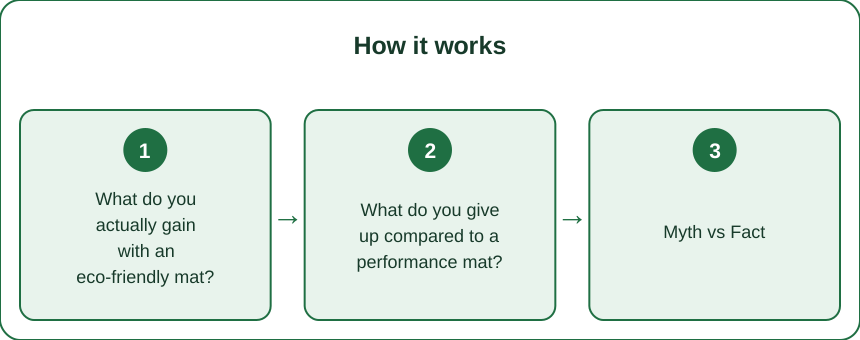
What do you actually gain with an eco-friendly mat?
Grip that improves with sweat, for cork and natural rubber specifically — the texture activates when damp, which is the opposite of most synthetic mats. That makes them genuinely excellent for hot yoga and heavy-sweat practices.
You also get lower or no off-gassing smell out of the box, and a smaller environmental footprint if that’s a real priority for you, not just a nice-to-have.
What do you give up compared to a performance mat?
Cushioning and joint support, mostly. Cork and rubber mats tend to be firmer and thinner than cushioned PVC or TPE options, which can matter for knee-heavy poses or anyone with sensitive joints.
Lifespan is the other tradeoff — natural materials generally wear faster than synthetic ones, especially cork’s surface layer, which can start flaking or thinning within a year or two of regular use versus 3-5+ years for a quality PVC mat.
Myth vs Fact: Eco Yoga Mats
Myth: Eco mats have better grip, period. Fact: Better grip when sweaty, often worse grip when dry — the same texture that activates with moisture can feel slick on a cool, dry practice day.
Myth: All eco mats smell better out of the box. Fact: Natural rubber specifically can have a noticeable rubber smell that some people find stronger than synthetic off-gassing, just different.
Myth: PVC mats are automatically bad for you. Fact: Phthalate-free PVC and TPE mats exist and test well for chemical safety — ‘eco’ and ‘safe’ aren’t the same axis, and it’s worth checking specific product certifications rather than assuming by material name.
Which mat type fits which practice?
Hot yoga / heavy sweat: cork or natural rubber — sweat-activated grip is the deciding factor here.
Gentle, restorative, yin: cushioning matters more than grip — a thicker TPE or PVC mat serves knees and hips better.
Travel: natural rubber tends to be heavier; look for thin TPE travel mats instead if portability is the priority.
Budget-conscious, long-term daily use: PVC’s durability usually wins on cost-per-year even though the upfront eco appeal is lower.
FAQ: Eco vs Performance Mat Questions, Answered
Are cork yoga mats worth the higher price?
For hot yoga or sweaty practices, often yes — the grip advantage is real and noticeable. For a dry, gentle home practice, the price premium buys less practical benefit.
Do eco mats need more maintenance?
Generally yes — natural rubber and cork benefit from more frequent cleaning and shouldn’t be left rolled up damp, or they degrade faster than synthetic mats would.
Is TPE a good middle ground?
Often, yes — TPE is synthetic but generally more recyclable and lower off-gassing than standard PVC, while keeping more of the cushioning and dry-grip performance eco mats sometimes lack.
TL;DR:
- Cork and natural rubber grip better when sweaty but offer less cushioning and shorter lifespan
- PVC and TPE mats last longer and cushion joints better but come with more upfront off-gassing smell
- ‘Eco’ and ‘chemically safe’ aren’t the same claim — check certifications, not just material name
- Match the mat type to your actual practice: hot yoga favors eco grip, gentle practice favors cushioning
There’s no universally ‘better’ mat here — just a real tradeoff worth matching to how sweaty and how gentle your actual practice is.
See It in Motion
Seen here: Super High Waist Embossed Yoga Leggings with Inner Pocket — shop it on bubblelime.com
Keep Reading
This article is for general informational and styling purposes only. Fit, sizing, and product availability may vary.