What Dual-Texture Yoga Mats Are Actually Solving (And Who Needs One)
Quick Answer: Dual-texture mats put a grippier, often thinner surface on one side for standing and balance poses, and a softer, more cushioned surface on the other for floor work and restorative poses — genuinely useful for practitioners who mix fast-paced and floor-based styles, less necessary for a single consistent practice type.
One side of the mat grips like a rock climbing hold. Flip it over, and it feels like lying on a cloud. That’s not a manufacturing quirk — it’s two different problems being solved on the same mat.
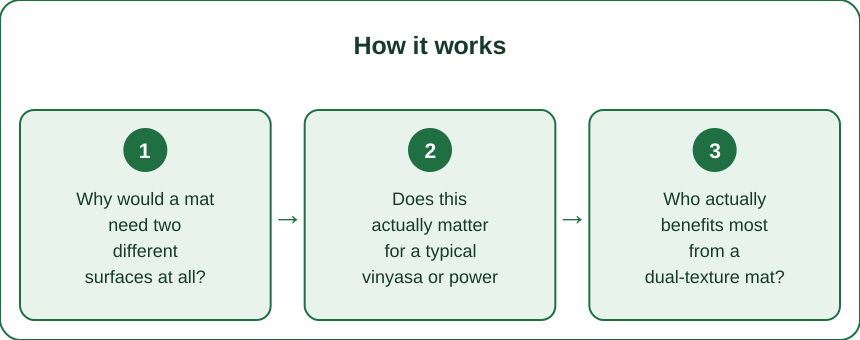
Why would a mat need two different surfaces at all?
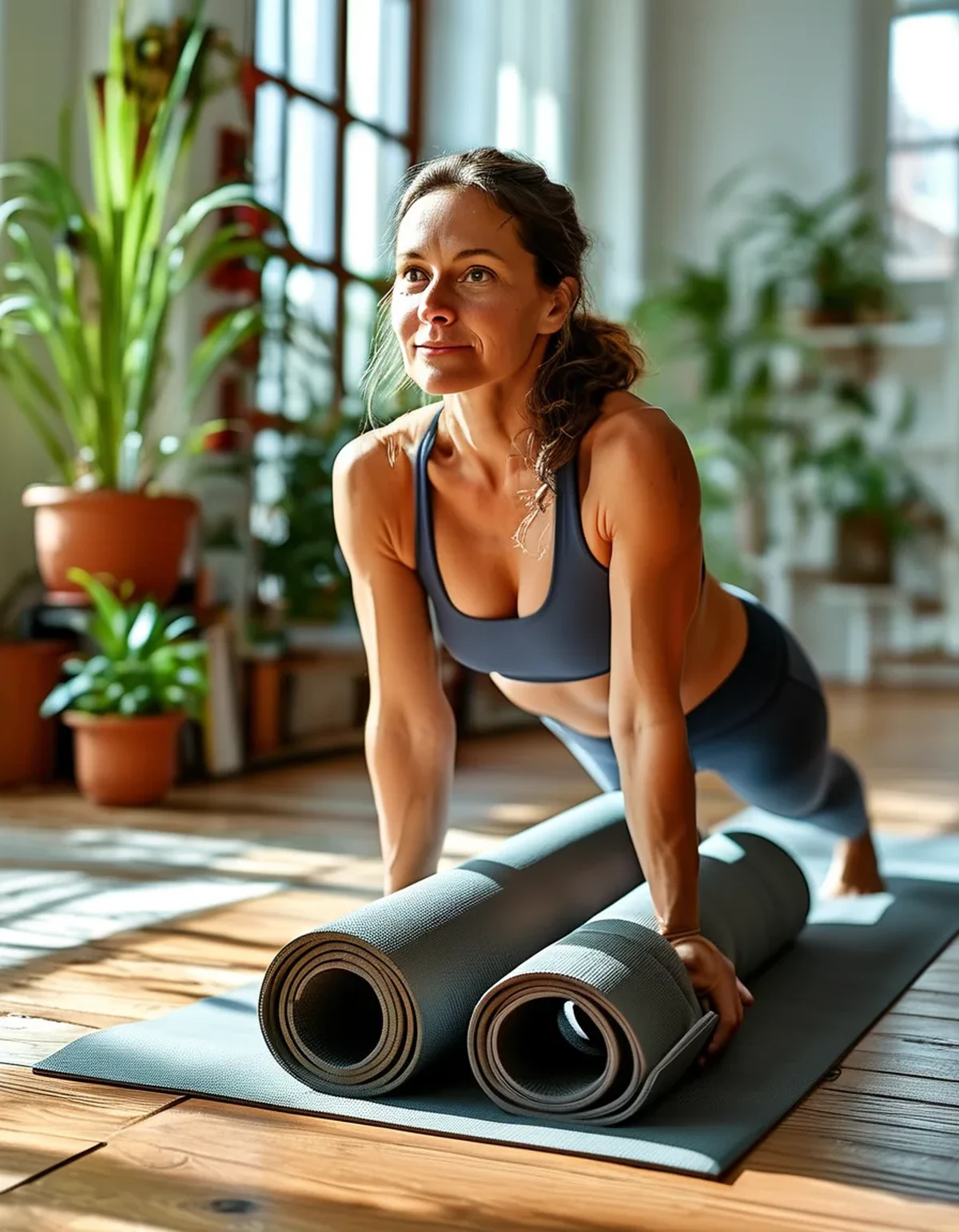
Standing and balance poses benefit most from maximum grip and a firmer, more stable surface — a soft, cushioned surface actually reduces stability for poses like warrior or tree pose, where you need to feel the floor clearly through your feet. Floor-based poses (seated stretches, restorative holds, kneeling work) benefit more from cushioning to protect knees, hips, and the spine during extended contact with a hard floor.
A single-texture mat has to compromise between these two needs, while a dual-texture design lets you choose the right surface for whatever segment of practice you’re in by simply flipping it.
Does this actually matter for a typical vinyasa or power yoga class?
Somewhat, though fast-paced styles that constantly transition between standing and floor poses don’t get to flip the mat mid-class, so the practical benefit is smaller than it sounds — you’re committing to one side for the whole session regardless. The dual-texture advantage matters more for practitioners who do distinctly separate practice types — a grippier side for a standing-focused practice one day, cushioned side for a restorative or yin practice another day.
Who actually benefits most from a dual-texture mat?
Practitioners who regularly switch between practice styles — vinyasa one day, yin or restorative another — get real functional use out of both sides. Home practitioners without space for multiple mats also benefit, since one dual-texture mat effectively replaces needing a separate grippy mat and a separate cushioned mat for different sessions.
Myth vs Fact: Dual-Texture Yoga Mats
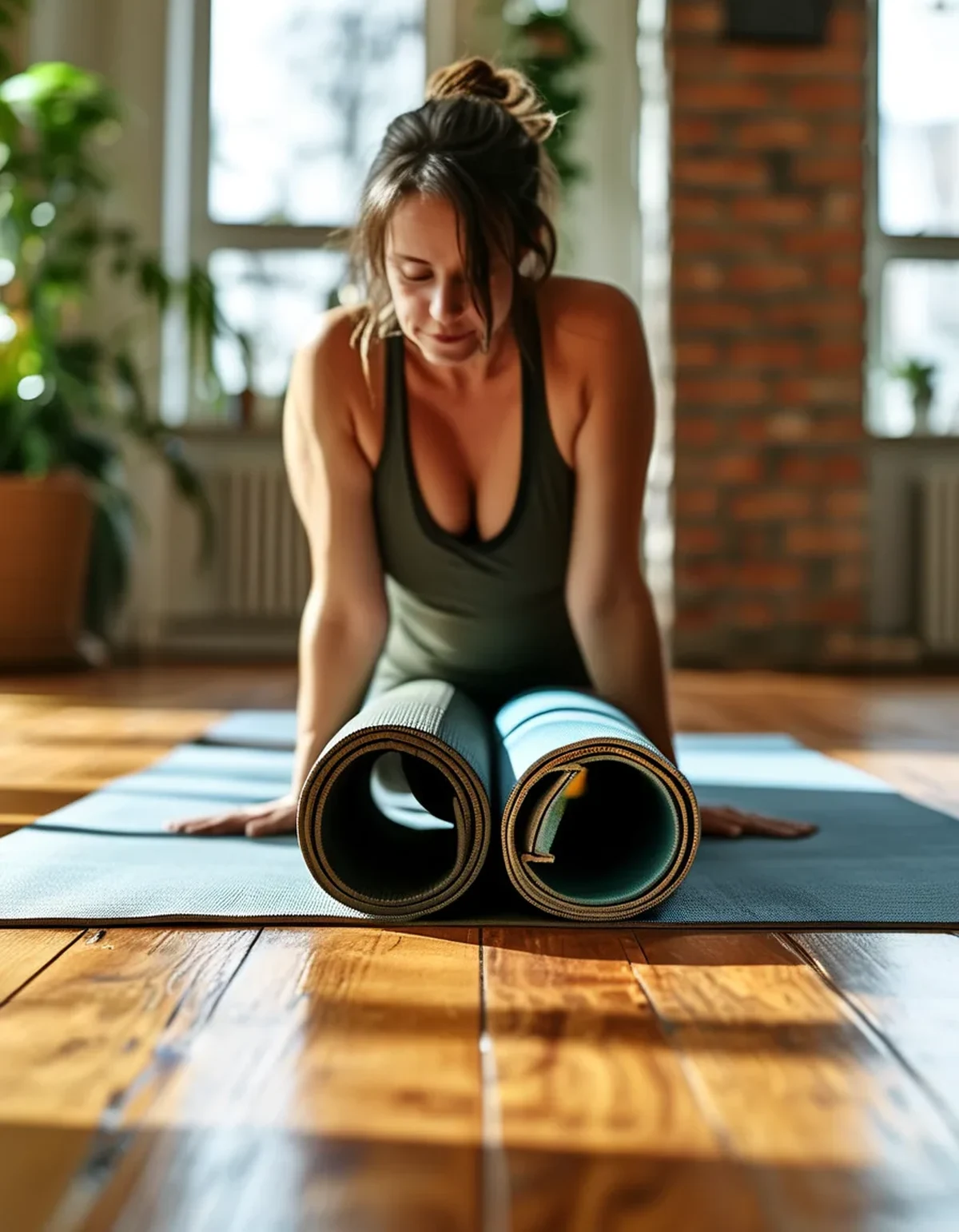
Myth: A dual-texture mat is strictly better than a single-texture one. Fact: for a single consistent practice style, a well-matched single-texture mat can outperform a dual-texture compromise on that specific need.
Myth: The cushioned side is always thicker than the grip side. Fact: some dual-texture mats use the same overall thickness with different surface treatments rather than different foam density, so cushioning differences vary by product, not universally.
Myth: You need to remember which side is “up” every time. Fact: most dual-texture mats have a clear visual or textural difference obvious enough to identify at a glance without needing to check labels.
Does price generally reflect real quality difference in dual-texture mats?
To a degree — cheaper dual-texture mats sometimes achieve the two-surface effect with a thin coating rather than genuinely different material composition, meaning the functional difference between sides is less pronounced and may wear off the coating faster with regular use. Mid-range and higher mats more often use genuinely different material layers bonded together, which holds the distinct texture properties longer through repeated washing and practice.
FAQ: Dual-Texture Yoga Mat Questions, Answered
Do dual-texture mats need different cleaning methods for each side?
Usually the same overall cleaning approach works for both, though checking manufacturer care instructions is worth it since some grip-side coatings are more sensitive to certain cleaners than the cushioned side.
Is a dual-texture mat heavier than a standard single-texture mat?
Often slightly, since it’s effectively combining two material properties into one mat, though the difference is usually modest rather than dramatically heavier.
Can I tell before buying which side will actually suit my practice better?
Checking whether the description specifies grip level and thickness for each side separately (rather than generic marketing language) gives a better sense of the real functional difference than assuming based on the product photos alone.
TL;DR:
- Dual-texture mats pair a grippier surface for standing poses with a cushioned surface for floor work
- The benefit is real but mainly for practitioners who switch between distinct practice styles
- Fast-paced classes that mix pose types within one session get less practical benefit from flipping
- Genuinely different material layers (not just a thin coating) hold the two-texture benefit longer over time
A dual-texture mat isn’t solving a marketing problem — it’s solving the real tension between grip and cushioning, just in a way that only pays off if your practice actually uses both sides.
See It in Motion
Seen here: High Waist Yoga Leggings with Side Pockets — shop it on bubblelime.com
Keep Reading
This article is for general informational and styling purposes only. Fit, sizing, and product availability may vary.