New Yoga Mats Are Slippery on Purpose - Here's How to Break One In
Quick Answer: New yoga mats feel slippery because of a thin release-agent film left from manufacturing, applied so the material doesn’t stick to molds and rollers. It wears off with use, but you can strip most of it in a day with a salt scrub, a coarse-salt-and-water soak, or a vinegar wipe followed by sun drying.
You spent real money on a mat with a reputation for grip, unrolled it, and slid straight out of downward dog. The mat isn’t wrong and neither is the review you read. There’s a layer between you and the surface you paid for.
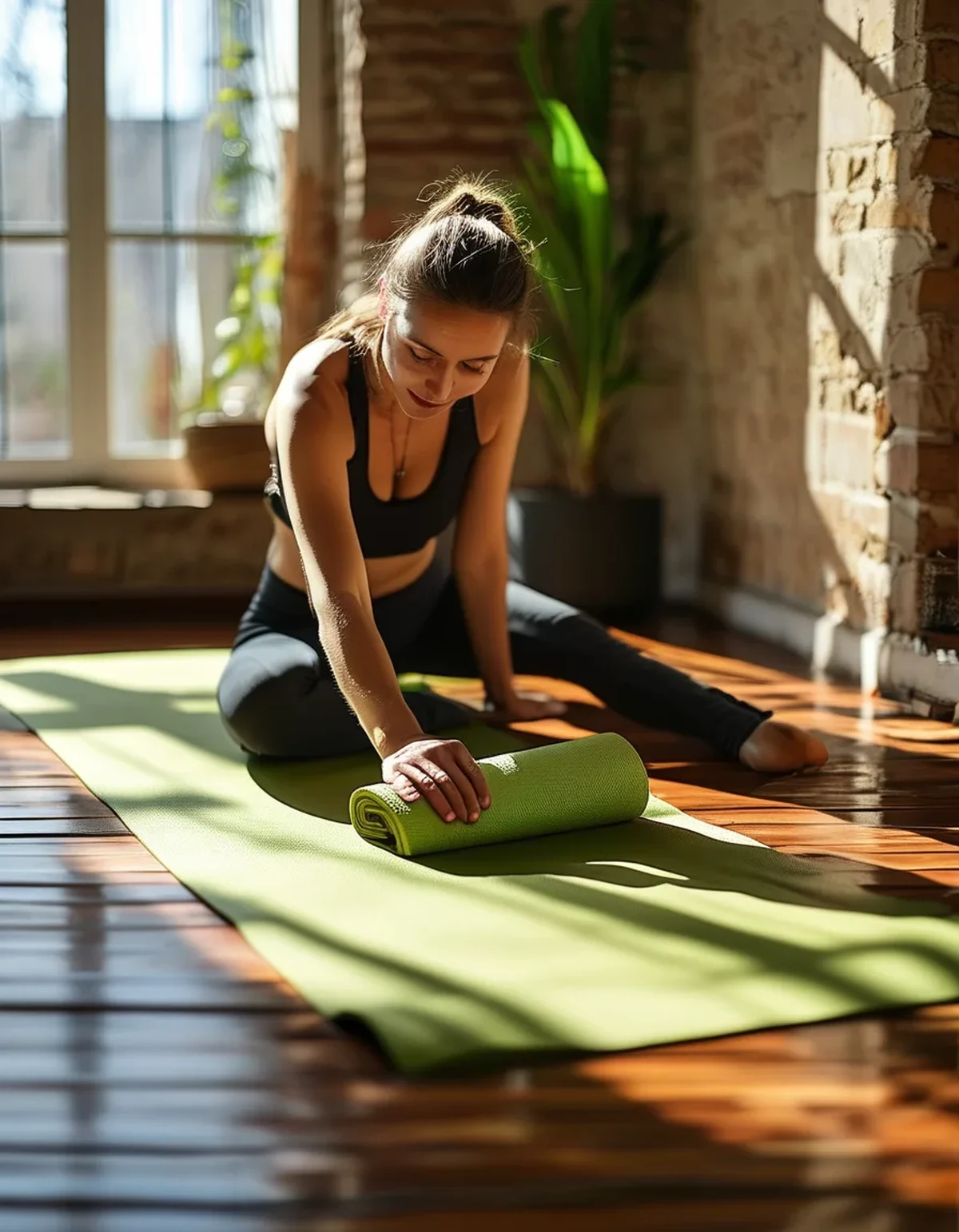
What is the film on a new mat?
During manufacturing, rubber and PVC mats pass through molds and rollers. To stop the material sticking to that equipment, manufacturers use release agents - typically silicone-based or wax-based compounds applied to the tooling.
A thin residue transfers onto the mat’s surface. It’s harmless, it’s very thin, and it’s exactly as slippery as you’d expect a release agent to be.
The same process is why new mats often have a strong smell. The off-gassing and the slipperiness come from the same manufacturing stage, which is why they tend to resolve on a similar timeline.
Natural rubber mats typically have the most noticeable film and the strongest smell. PVC mats have less film but often a slicker base texture to begin with. TPE mats vary widely by manufacturer.
What this means practically: the mat’s advertised grip is real, it’s just currently under a layer. Nothing is wrong with your purchase and nothing needs returning.
What’s the fastest way to strip it?
Ranked by speed and effectiveness.
1. Coarse salt scrub - fastest, best for rubber mats. Sprinkle a generous handful of coarse sea salt over the mat, dampen a cloth, and scrub in circles across the whole surface with moderate pressure. Let it sit 20 minutes, then wipe clean with a damp cloth and air dry. The salt provides mechanical abrasion that lifts the film, and it’s gentle enough not to damage the material. One session usually produces a dramatic change.
2. Salt water soak - most thorough. Fill a bathtub with warm water, add a cup of coarse salt, and submerge the unrolled mat for two hours. Rinse, hang to dry fully - which takes 24-48 hours, so check with the manufacturer first, as some closed-cell mats shouldn’t be soaked.
3. Vinegar and water wipe - mildest. One part white vinegar to three parts water in a spray bottle. Spray, wipe with a cloth, repeat, then dry. Effective but usually needs several rounds over a week.
4. Sun exposure - accelerator, not a solution alone. Two to three hours of indirect sun after any of the above helps the residual film break down and clears the smell. Indirect only - direct sun degrades rubber and fades PVC. A shaded balcony on a bright day is ideal.
5. Just use it. Practice on it daily and the film wears away in one to three weeks. This is the zero-effort option and it works, it’s just slower.
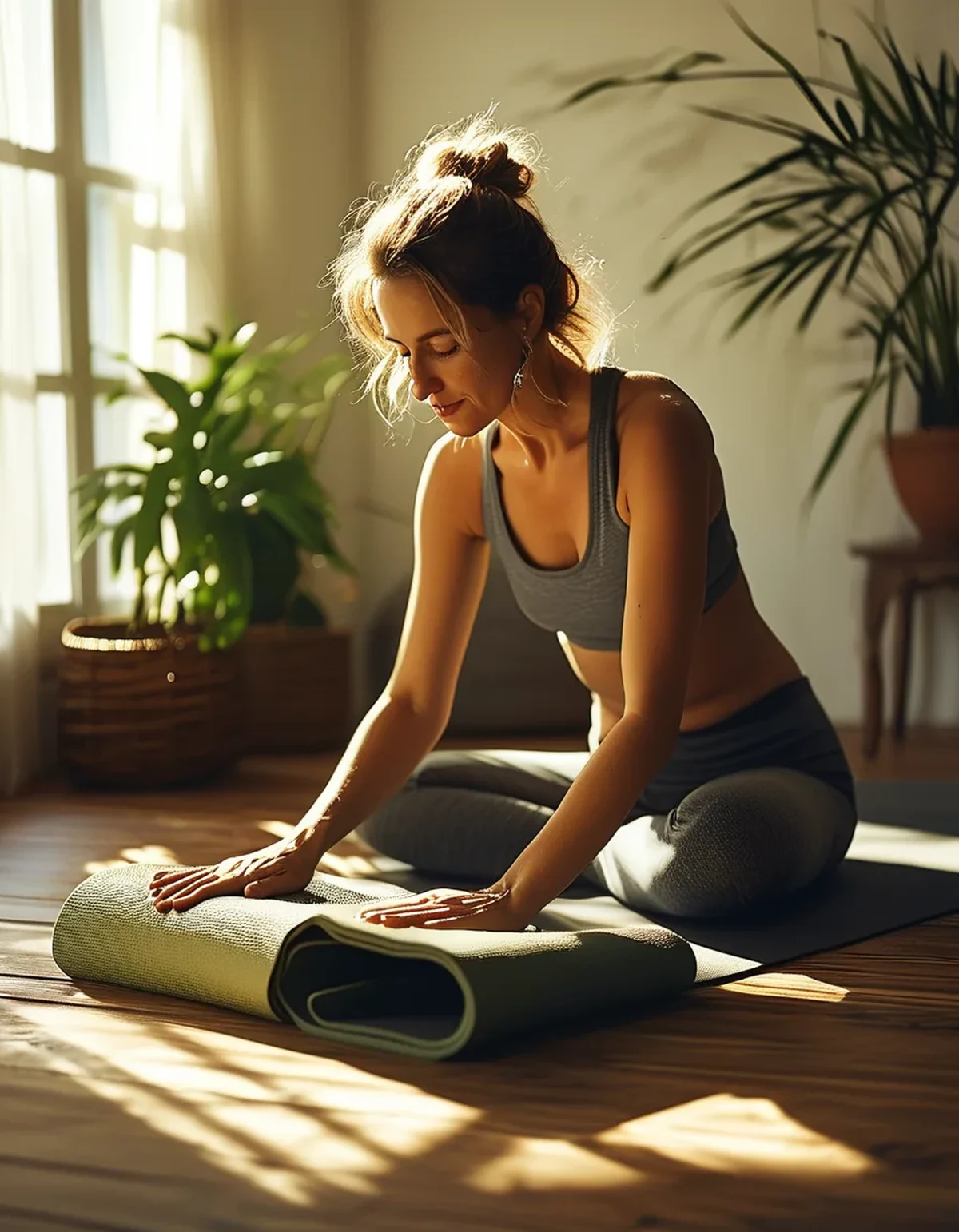
What should I avoid doing?
Don’t use dish soap or detergent. Soap residue creates its own slippery film and is difficult to fully rinse out of a textured surface. This is the most common well-intentioned mistake.
Don’t use oil-based or ‘conditioning’ products. Anything marketed to restore or condition adds material to the surface, which is the opposite of what a new mat needs.
Don’t use alcohol-based cleaners repeatedly. They strip the film effectively but also dry out and degrade rubber over time, shortening the mat’s life. Fine occasionally, poor as a routine.
Don’t put it in a washing machine. Agitation delaminates most mats, and the weight of a soaked mat can damage the machine.
Don’t leave it in direct sun for hours. Rubber becomes brittle and cracks; PVC discolors. This is one of the most common ways people ruin an otherwise good mat.
Don’t roll it up wet. Trapped moisture in a rolled mat produces mildew and a smell far worse than the factory one. Dry completely, unrolled or hanging, before storing.
What Nobody Tells You About Breaking In a Mat
Grip improves in two stages. The film comes off in the first week or two. Then there’s a slower change over a couple of months as the surface texture develops microscopic wear that actually increases friction. A six-month-old mat often grips better than a two-week-old one.
Sweat changes everything. Some mats - particularly open-cell natural rubber - grip better when slightly damp, which is why they’re popular for hot yoga. On those mats, the dry-hands slipperiness of the first week is misleading about how it’ll perform in a warm class.
A towel is a legitimate bridge, not a defeat. A yoga towel over the mat for the first two weeks solves the problem entirely while the film wears off naturally. Plenty of people never stop using one.
The smell and the slip resolve together. If your mat still smells strongly, the film is still there. The nose is a decent progress indicator.
Hand slip and foot slip are different problems. If only your hands slip, that’s often skin oil rather than mat film - washing your hands before practice fixes more than people expect. If your feet slip too, it’s the mat.
Storage position matters afterward. Rolling the mat with the top surface facing outward keeps the practicing side under slight tension and helps it lie flat. Rolling it inward makes the edges curl up, which is a different annoyance you’ll be dealing with for months.
Buying an expensive mat doesn’t skip this. Premium natural rubber mats often have the most pronounced break-in period precisely because of the material. Slipperiness on day one is not a quality signal in either direction.
FAQ: New Yoga Mat Questions, Answered
How long until my mat grips properly on its own?
One to three weeks of regular practice, or a single salt scrub plus a day of airing.
Can I speed it up with a rougher scrub?
A soft brush with the salt is fine. Anything abrasive enough to visibly scratch the surface will damage the texture permanently, which reduces grip rather than improving it.
My mat is a year old and slippery again. Same fix?
No - that’s usually accumulated body oil and sweat residue rather than factory film. A vinegar-and-water wipe handles that; the salt scrub is overkill and won’t help more.
TL;DR:
- New mats are slippery because of manufacturing release agents, not defects
- A coarse salt scrub plus a 20-minute rest is the fastest fix, especially on rubber mats
- Never use dish soap, oils, or direct sun - all three make it worse
- Grip improves in two stages: film removal in weeks, texture development over months
- A yoga towel is a perfectly good bridge for the first two weeks
The grip you paid for is under there. You just have to get the factory off it first.
See It in Motion
Seen here: Bootcut Capri Yoga Pants with Pockets — shop similar styles on bubblelime.com
Keep Reading
This article is for general informational and styling purposes only. Fit, sizing, and product availability may vary.