What Those Lines on Your Yoga Mat Are Actually For (and How to Use Them)
Quick Answer: Alignment lines mark reference points for foot and hand placement — centerlines for symmetry, diagonal lines for lunge and warrior pose foot angles, and grid lines for checking whether your hips and shoulders are square. They’re a self-correction tool for practicing without a teacher’s live feedback in the room.
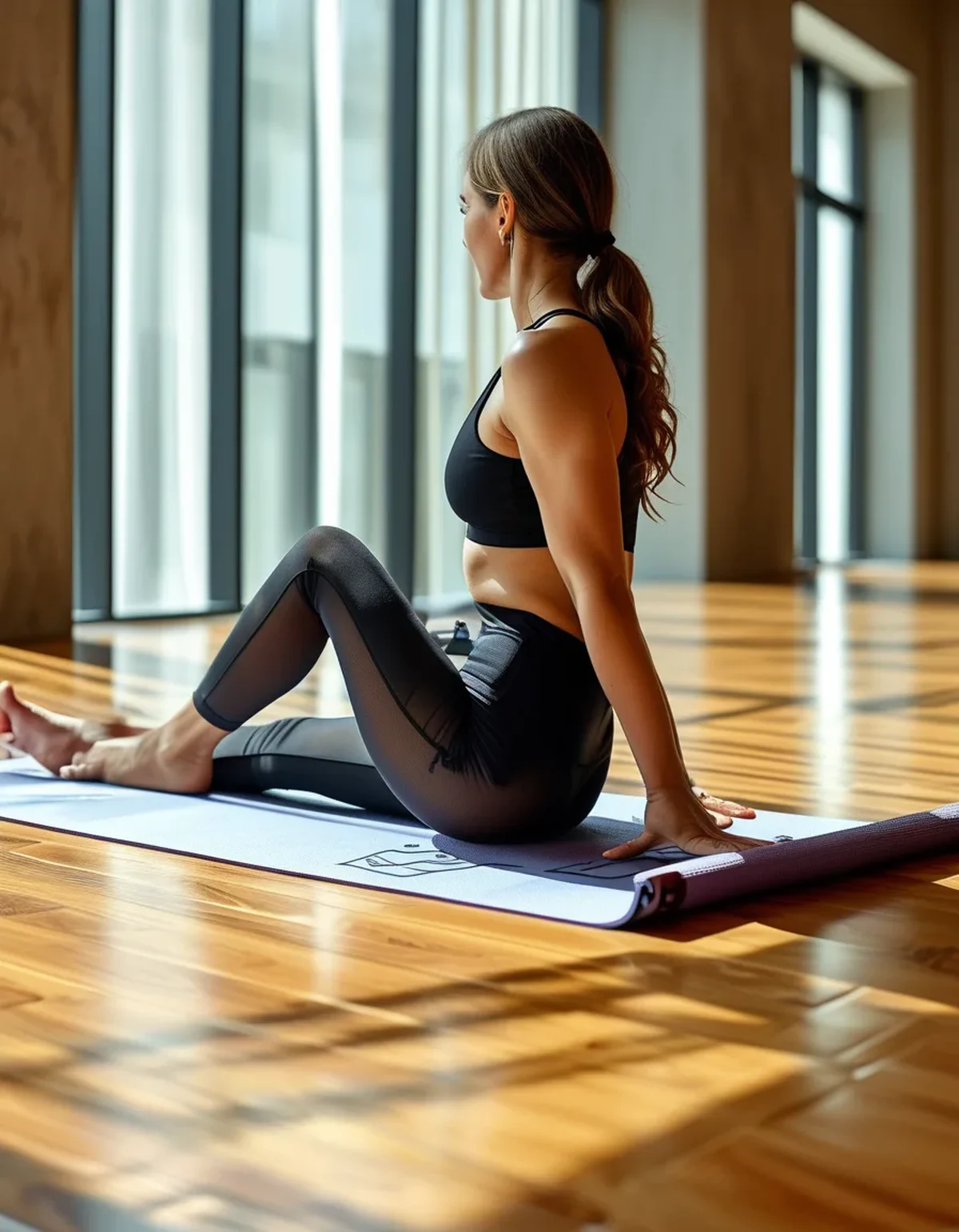
The printed grid on an alignment mat isn’t decoration — it’s a stand-in for the verbal cues a teacher would normally give you in a studio class, translated into something you can see on the floor.
What do the different lines actually indicate?
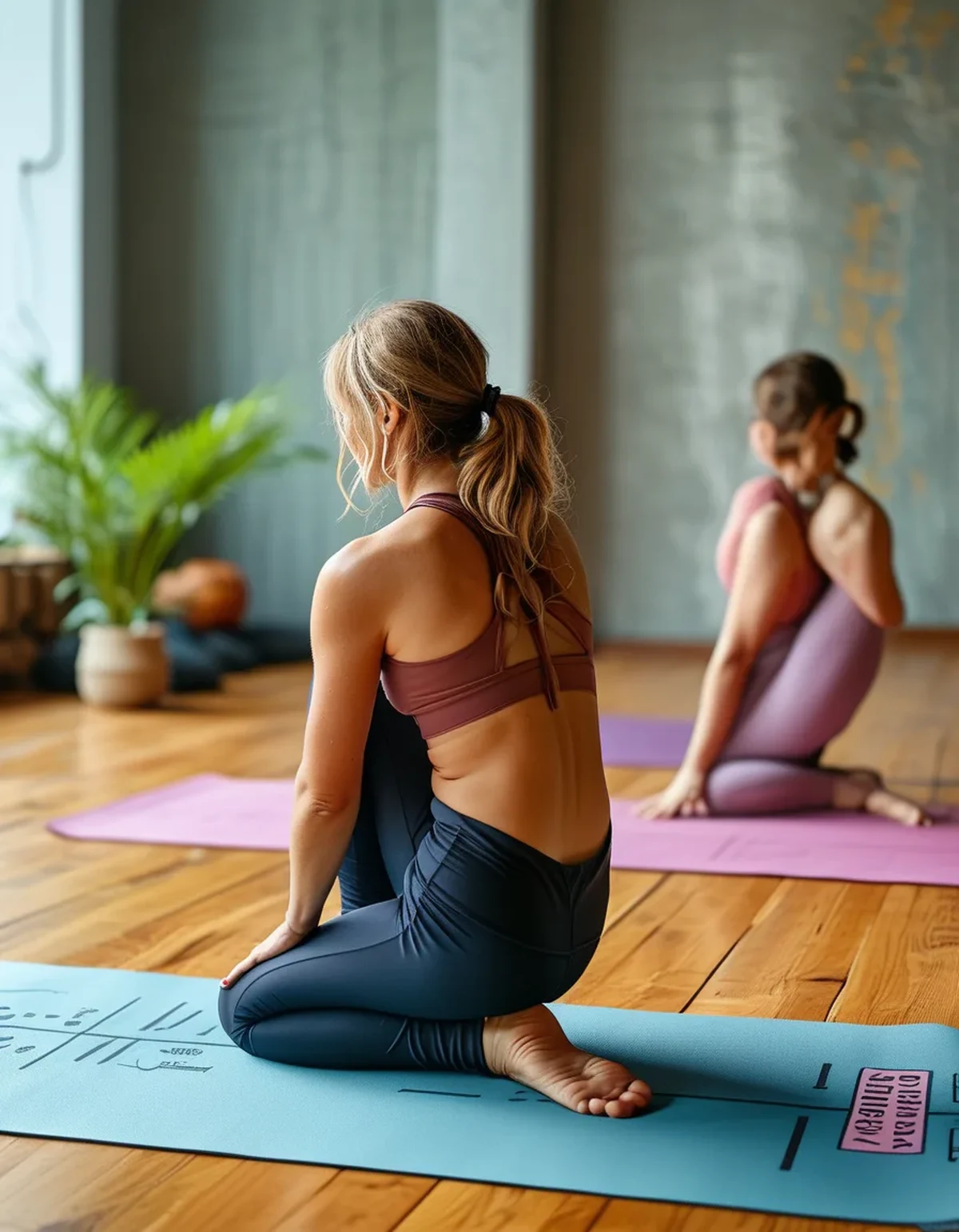
The center line running the length of the mat helps you check symmetry — whether your feet, hands, or hips are evenly spaced from the midline during poses like downward dog or standing forward folds.
Diagonal lines, often near the top and bottom thirds of the mat, mark common lunge and warrior pose foot angles, giving you a visual target for how far apart and at what angle your feet should sit rather than guessing.
Horizontal or grid lines across the mat’s width help check whether your hips and shoulders are square to the front of the mat, a common alignment cue in standing poses that’s hard to self-assess without a mirror.
How do you actually use these lines during practice?
Start by simply noticing where your hands and feet land relative to the lines in a pose you already know well, without trying to force a change — this builds body awareness of your natural tendencies (a slightly narrower stance, a rotated foot) that you might not otherwise catch.
Once you’ve noticed a pattern, use the lines as an active reference during setup: for example, placing your back foot at the mat’s marked diagonal angle in warrior II rather than an approximate angle you’re guessing at.
Myth vs Fact: Alignment Mat Edition
Myth: Alignment lines are only useful for beginners. Fact: Experienced practitioners use them too, often to catch asymmetries that develop over years of practice — a body that’s gotten used to compensating for one tight hip, for instance, benefits from the same visual check.
Myth: You should always align your feet exactly on the printed lines. Fact: The lines are a general reference, not a rigid rule — individual anatomy (hip width, leg length) means your ideal stance may sit slightly off the printed marks, and that’s normal.
FAQ: Yoga Mat Alignment Line Questions, Answered
Do all yoga mats have alignment lines?
No — they’re a specific product category, sometimes called alignment mats, and cost somewhat more than a standard solid-color mat due to the printed guide pattern.
Are alignment lines useful for styles other than standing poses?
They’re most useful for standing and balance poses where foot and hand placement is precise; they add less value for seated or restorative poses like yin.
Can alignment lines actually correct my form without a teacher present?
They help significantly with the postural and placement side of alignment, but they can’t replace feedback on things like muscle engagement or breath — best used alongside occasional teacher-led classes, not as a full replacement.
TL;DR:
- Center lines check symmetry; diagonal lines mark lunge and warrior foot angles; grid lines check squared hips and shoulders
- Use them first to notice your natural tendencies, then as an active setup reference
- They’re useful for experienced practitioners too, not just beginners
- Best paired with occasional teacher feedback, not a full replacement for it
Next time you unroll an alignment mat, actually look down and use the lines — most people ignore the exact feature that makes that mat worth choosing over a plain one.
See It in Motion
Seen here: High Waist Yoga Leggings with Side Pockets — shop it on bubblelime.com
Keep Reading
This article is for general informational and styling purposes only. Fit, sizing, and product availability may vary.