Why New Yoga Mats Smell So Strong (and When the Smell Should Actually Fade)
Quick Answer: New yoga mat smell comes from off-gassing — residual manufacturing compounds evaporating out of PVC, TPE, or rubber material — and typically fades noticeably within one to two weeks of regular airing out. A smell that remains strong after a month, or causes headaches or irritation, is worth addressing directly with the manufacturer.

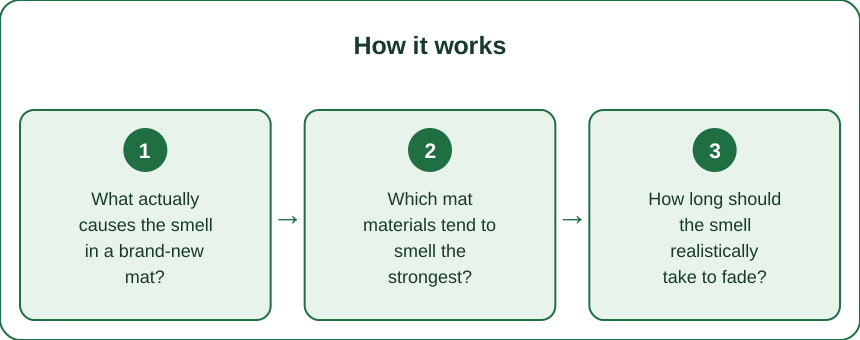
What actually causes the smell in a brand-new mat?
Off-gassing is the release of volatile compounds left over from the manufacturing process — plasticizers in PVC mats, or residual processing agents in natural rubber and TPE mats. This is a genuinely common and largely harmless process across most consumer products made from these materials, not unique to yoga mats or a sign of a defective product.
Which mat materials tend to smell the strongest?
PVC mats generally have the strongest and most persistent initial smell, due to the plasticizers used to keep the material flexible. Natural rubber mats have a different, more earthy smell that some people find equally strong but less chemical-feeling, while TPE mats tend to off-gas the least and fade fastest of the common material types.

How long should the smell realistically take to fade?
Most mats lose the majority of their smell within one to two weeks of being unrolled and left in a well-ventilated space, ideally outdoors or near an open window rather than sealed in a closet. A mat that’s actively used, rather than left rolled up, also tends to off-gas faster since airflow and stretching help release trapped compounds.
5 Mistakes People Make With a Smelly New Mat
Mistake 1: Keeping it rolled up in its original packaging, which traps off-gassing compounds instead of letting them disperse.
Mistake 2: Storing it in a closed closet or car, both of which concentrate the smell rather than airing it out.
Mistake 3: Assuming a strong smell means a low-quality or unsafe mat, when smell intensity doesn’t reliably correlate with material safety.
Mistake 4: Washing a PVC mat with harsh soap early on, which can degrade the surface texture before it’s had a chance to break in naturally.
Mistake 5: Ignoring genuine symptoms like headaches or throat irritation, which — unlike ordinary smell — are worth taking seriously and following up on with the manufacturer.
FAQ: Yoga Mat Smell Questions, Answered
Is off-gassing smell a sign the mat is unsafe to use?
Generally no — reputable mat brands test materials against safety standards, and smell alone isn’t a reliable indicator of safety, though genuine symptoms like headaches should be taken seriously.
Does leaving a mat in sunlight speed up off-gassing?
Moderate sun exposure can speed up the process, but prolonged direct sun risks degrading certain mat materials over time, so brief outdoor airing is a better balance.
Should a mat that still smells strong after a month be returned?
If it’s within the return window and the smell hasn’t meaningfully faded with regular airing, that’s a reasonable reason to contact the seller or manufacturer.
TL;DR:
- New mat smell comes from off-gassing, a normal release of manufacturing residue
- PVC mats tend to smell strongest and longest; TPE fades fastest
- Airing out unrolled, ideally near open airflow, clears most smell within one to two weeks
- Genuine irritation or headaches are worth following up on, unlike ordinary fading smell
A strong smell on a brand-new mat is almost always temporary chemistry, not a defect — give it fresh air and a couple of weeks before judging the mat itself.
See It in Motion
Seen here: UPF 50+ Racerback Yoga Tank Top — shop it on bubblelime.com
Keep Reading
This article is for general informational and styling purposes only. Fit, sizing, and product availability may vary.