Why a Brand New Yoga Mat Is Slippery and a Beaten-Up One Is Not
Quick Answer: New mats carry a manufacturing release-agent residue on the surface, and the top layer has not yet developed the micro-texture that grip depends on. Most mats need 10 to 20 sessions to break in. You can speed it up with a salt scrub or a few washes with mild soap and thorough drying, and you should never use oil-based cleaners, which permanently seal the surface.
You spend real money on a mat, roll it out, and slide straight out of down dog. This is normal, it is fixable, and it is not a defect.

Why is a new mat slippery?
Two reasons that compound.
Manufacturing residue is the main one. Rubber and PVC mats are made in molds, and mold release agents are used so the material separates cleanly. Some of that residue remains on the finished surface, and it is by design slippery.
The second is surface texture. Grip on a yoga mat comes from micro-scale surface irregularity that creates friction with skin. A fresh mat surface is comparatively smooth and uniform, and the texture that produces grip develops through use as the top layer wears very slightly.
This is why natural rubber mats, which are typically the grippiest once broken in, are often the most slippery when new. The material that eventually grips best starts with the most residue.
How long does breaking in actually take?
It varies by material. PVC mats often need 15 to 25 sessions. Natural rubber mats are usually usable within 5 to 10 and reach their best grip around 20. Polyurethane-topped mats grip well almost immediately, which is part of what you pay for.
Sweat accelerates it substantially. A hot yoga practitioner will break in a mat in a fraction of the sessions a gentle practitioner needs, because moisture plus friction removes residue faster.
A mat used only for stretching and floor work may never fully break in, simply because it never receives the friction that does the job. If you bought a grippy mat and use it gently, you may need to break it in deliberately rather than waiting.
What are the two ways to speed it up?
The salt scrub is the traditional method and it works. Sprinkle coarse sea salt generously over the mat, leave it overnight, then scrub with a slightly damp stiff brush and wipe clean. The salt is mildly abrasive and absorbs residue at the same time. One treatment makes a noticeable difference; two or three completes the job on most mats.
The wash method is faster and gentler. Wipe the mat with a cloth and a solution of warm water with a small amount of unscented dish soap, rinse thoroughly with a clean damp cloth, and dry completely flat or over a rail. Repeat after each of the first several sessions.
Drying matters more than washing. A mat put away damp develops a slick film and can grow mildew, particularly closed-cell mats where moisture sits on the surface rather than absorbing.
What not to do: oil-based cleaners, essential oil sprays, or anything marketed as conditioning. Oil sinks into the surface, cannot be removed, and permanently reduces grip. This is the single most common way people ruin an expensive mat.
Myth vs Fact: yoga mat grip edition
Myth: A slippery new mat is defective. Fact: Break-in is normal for almost every material except polyurethane-topped mats. Returning a new rubber mat for slipperiness usually means buying another mat with the same characteristic.
Myth: Thicker mats grip better. Fact: Thickness affects cushioning and stability, not grip. A thick soft mat is often less stable in balance poses because your foot sinks.
Myth: A towel over the mat is a permanent solution. Fact: A proper grip towel works well for hot yoga and is a legitimate tool, but a regular towel on a dry mat slides more than the mat did.
Myth: Washing a mat in the washing machine is fine. Fact: For most materials it delaminates the layers or destroys the closed-cell structure. A few mats are machine washable and say so explicitly; assume yours is not unless the manufacturer says otherwise.
How do you keep the grip once you have it?
Wipe it down after every session with water and a cloth. Sweat leaves salt and oils that build up into exactly the slick film you spent weeks removing.
Dry it flat or hanging, never rolled. A rolled damp mat is the fastest route back to slipperiness and to smell.
Keep it out of direct sun. UV degrades both rubber and PVC, and a mat left in a car or by a window develops a chalky, brittle surface that never grips properly again.
Store it rolled with the top surface facing outward. Rolling top-in causes the edges to curl upward when you unroll it, which is a small annoyance that compounds over months.
And wash your feet and hands. Skin oils and lotion transfer directly to the mat and are a common cause of a suddenly slippery mat that was fine last week.
FAQ: Yoga Mat Questions, Answered
Should I buy a mat that does not need breaking in?
Polyurethane-topped mats grip immediately and are excellent for hot yoga, but they are more expensive and the top layer wears out faster than rubber. It is a real trade-off, not a straight upgrade.
How often should I deep clean a mat?
A thorough wash monthly for regular practice, weekly for hot yoga. A quick wipe after every session in either case.
When does a mat need replacing?
When the surface has worn through to a different texture in your standing spots, when it no longer lies flat, or when it has developed a smell that a proper wash does not remove. Typically 1 to 3 years depending on material and use.
TL;DR:
- New mats are slippery from mold release residue and an undeveloped surface texture.
- Break-in takes 10 to 20 sessions naturally, or one salt scrub plus a few washes deliberately.
- Never use oil-based cleaners — the damage is permanent.
- Wipe after every session and dry flat to keep the grip you developed.
The mat you almost returned in week one is usually the one you love in month three. Give it a salt scrub and a fortnight before deciding it was a bad purchase.
See It in Motion
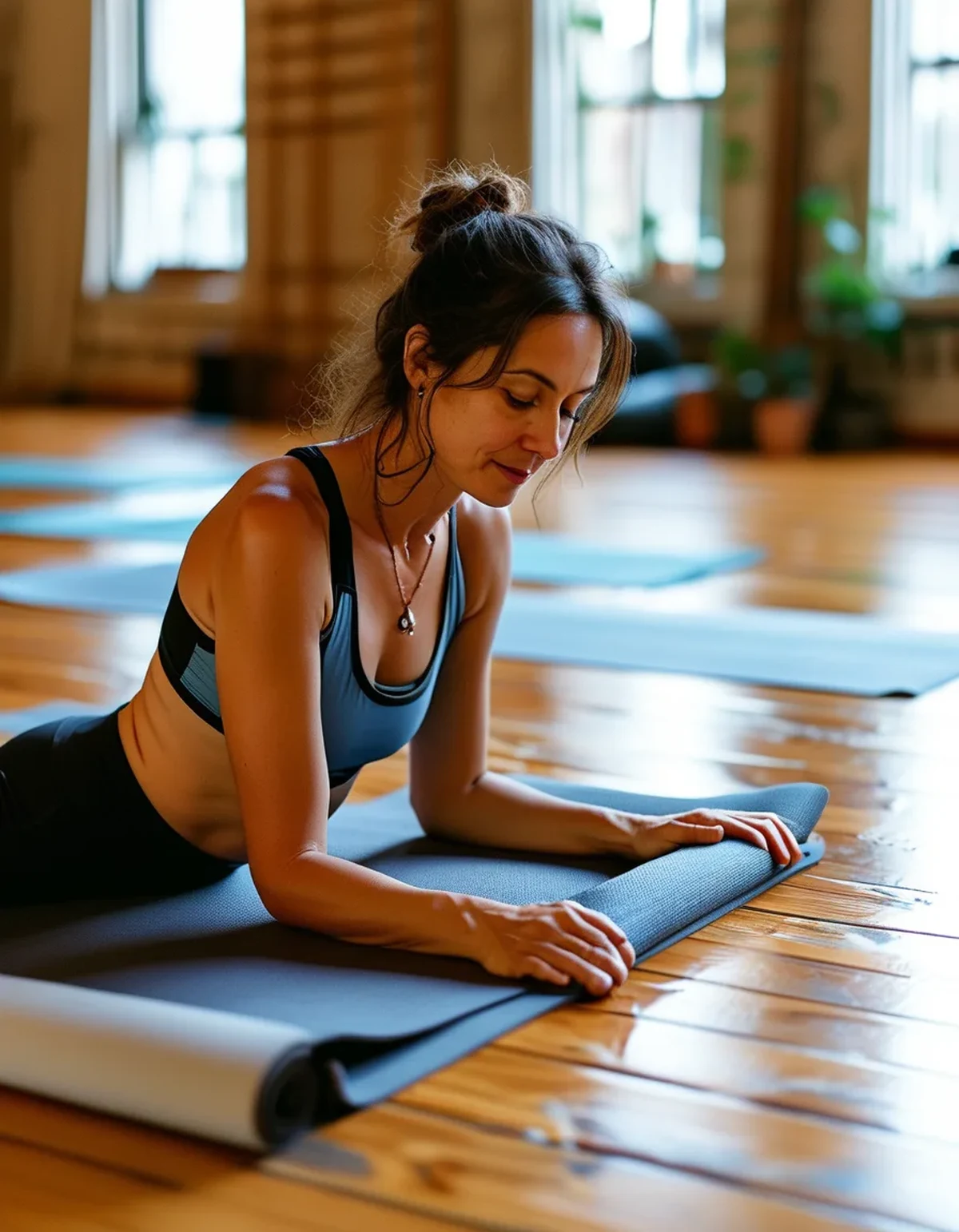
Seen here: Super High Waist Embossed Yoga Leggings with Inner Pocket — shop it on bubblelime.com
Keep Reading
This article is for general informational and styling purposes only. Fit, sizing, and product availability may vary.