Sweaty Hands Sliding in Downward Dog: The Real Grip Fixes
Quick Answer: Slipping happens when a film of sweat sits between your palm and the mat surface — and in late-summer humidity, sweat stops evaporating and the film wins. The fixes, in order of reliability: a grippy yoga towel over the mat for sweaty sessions, a mat surface that grips when damp (polyurethane top layers, natural rubber, cork) rather than smooth PVC that only grips dry, washing off both the new-mat factory film and the old-mat sweat residue, airflow to dry the room, and hands-and-feet prep — no lotion before practice. Death-gripping the mat harder is the one fix that never works.
Your grip strength is fine. There is simply a puddle between you and the mat.
Why do your hands slip more in humid weather?
Because grip on a mat is friction, and a water film is a lubricant — physics, not effort.
Dry palm on dry mat generates high friction — skin microscopically interlocks with the mat’s texture and you stick. Add sweat and a thin water layer separates the two surfaces; you are now hydroplaning at very low speed. The more continuous the film, the less your skin ever touches mat.
Humidity decides whether the film drains or grows. In dry air, palm sweat evaporates almost as fast as it arrives and grip survives. In an August practice room, the air is already loaded — evaporation stalls, sweat accumulates, and the same hands on the same mat behave completely differently than they did in April. Hot yoga simply speeds up the timeline.
Mat surface chemistry decides what damp does next. Smooth closed-cell PVC mats — including many excellent, durable classics — grip beautifully dry and turn slick with the first sweat drops. Polyurethane-topped mats and cork behave the opposite way: they absorb or even improve with slight moisture. Same puddle, opposite outcome, depending on what the top millimeter is made of.
Residue quietly tips the balance. Brand-new mats ship with a factory film that keeps them slippery for the first sessions; old mats accumulate sweat salts, body oil, and lotion transfer that seal the texture. Both read as mystery slipperiness and both wash off.
And slipping compounds itself. The instant hands slide in downward dog, you grip harder, shoulders tense, more effort means more sweat — the spiral that makes minute thirty worse than minute five. Breaking the moisture chain anywhere breaks the spiral.
What actually fixes it, ranked by reliability?
Towel first, surface second, cleaning third, airflow and skin prep as multipliers.
1. A proper yoga towel over the mat. Microfiber with grippy underside dots, laid flat, corners anchored. It converts sweat from lubricant into traction — damp microfiber grips more, not less — and it is the single intervention that works on any mat, any humidity, immediately. A hand towel across just the top third serves fine for hands-only slipping. For hot yoga and August practice, this is not an accessory; it is the floor.
2. A mat whose surface likes moisture. If you practice sweaty year-round, the durable answer is a polyurethane-top mat, natural rubber, or cork — surfaces engineered or naturally suited to damp grip. Smooth PVC mats can stay in rotation for winter and restorative sessions. Match the mat to your sweat reality, not to the mat’s reputation.
3. Wash the mat properly. New mat: two or three washes with mild soapy water to strip the factory film — the slippery-new-mat phase is real and temporary. Established mat: regular wipe-downs plus an occasional genuine soap-and-water wash to lift the sweat-salt-and-oil glaze. If your reliable old mat gradually turned slick, it is dirty, not worn out.
4. Move the air. A fan in the practice space lowers humidity at skin level, restarts evaporation, and buys your palms minutes of extra grip — the identical fan logic every other summer workout uses.
5. Prep the skin. No lotion or sunscreen on palms within a couple of hours of practice — moisturizer is pre-applied lubricant. Wash hands with plain soap before sweaty sessions; a small towel beside the mat for palm-drying between flows finishes the kit. Rosin-style grip powders exist for the heaviest sweaters, applied lightly to palms, not dusted across the mat.
What about technique — can you grip your way out of slipping?
Partially, and the right technique is pressure distribution — not clenching.
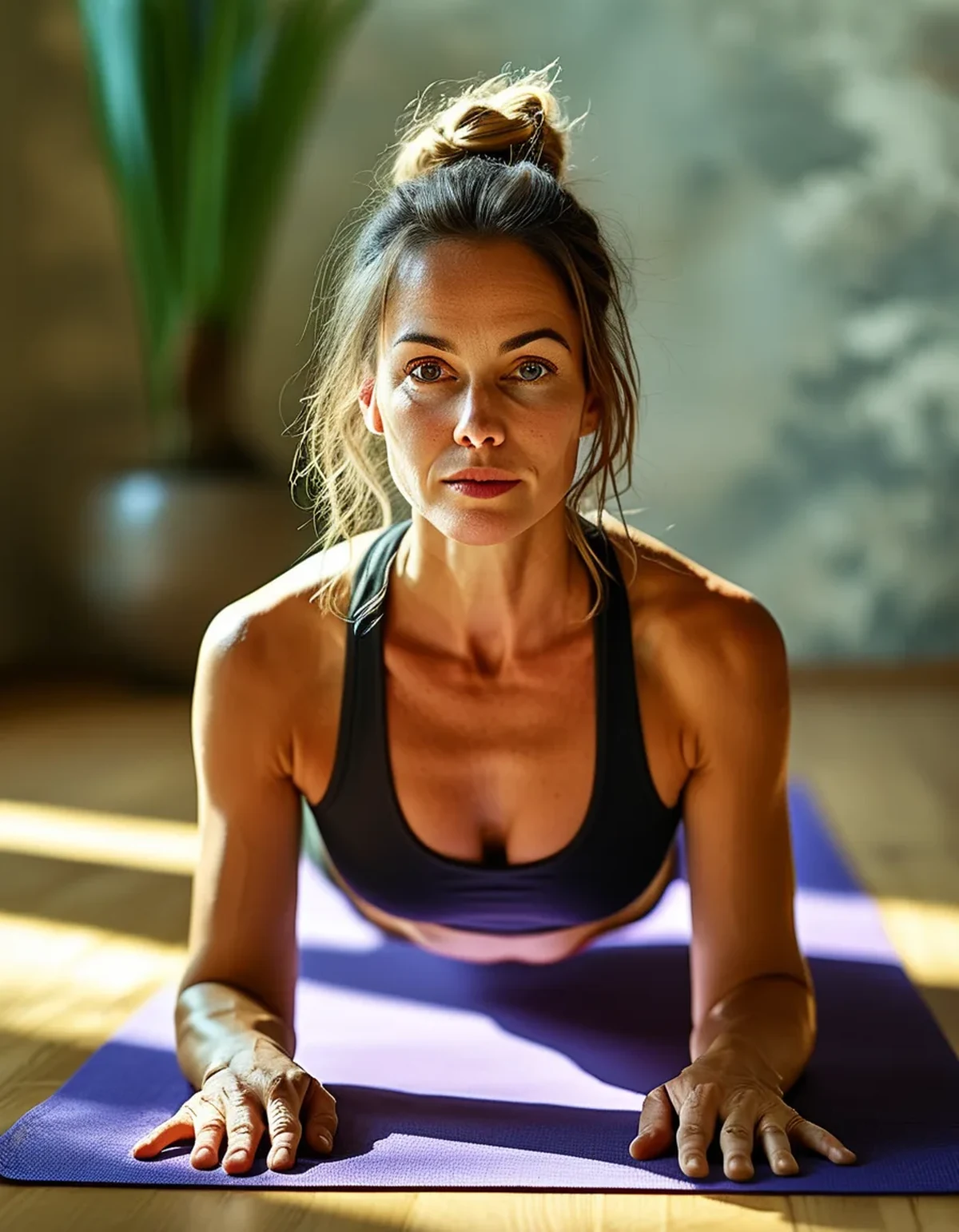
Spread the load through the whole hand. The reflex when slipping is clawing with fingertips or dumping into the heel of the palm — both shrink your contact patch exactly when you need it biggest. The cue that fixes most slipping-adjacent wrist complaints too: root the knuckle line — especially the index-finger knuckle — press through fingertip pads, and keep the palm’s full surface engaged. More contact area equals more friction at the same sweat level.
Use the mat’s friction sideways. In downward dog, energetically drag hands toward your feet without moving them — engaging shoulders and shifting force from straight-down shear into the mat’s texture. Slipping drops noticeably, and shoulders organize better as a bonus.
Send weight back. Most slippery-dog suffering comes from too much load on the hands, period. Lifting hips higher and back, bending knees generously, and letting legs carry their share reduces the force that has to survive the sweat film.
Adjust the practice to the conditions. On the most humid days: shorter holds in slip-prone poses, forearm dog as a swap, knees-down transitions, and a deliberate palm-dry at every child’s pose. Nobody’s practice is diminished by adapting to weather — August vinyasa in a wet room simply is a different environment than October’s.
Dress for less drip. Sweat running down forearms feeds the palm puddle from above; a top that actually absorbs or wicks at the arms, and leggings with enough coverage to catch leg sweat before the mat does, keep the workspace drier. A headband stops the face-to-mat supply line in folds.
And accept the honest limit: technique halves the problem; it does not repeal physics. Technique plus towel plus clean mat is the full solution stack.
This is general practice guidance. Wrist pain that persists beyond grip adjustments deserves attention from a teacher or professional rather than more repetitions.
5 Mistakes That Keep You Sliding
1. Death-gripping the mat. Clenching shrinks your contact patch, exhausts forearms, tenses shoulders, and generates more sweat — the complete opposite of the spread-and-root technique that works. If your forearms ache after practice, this is why.
2. Practicing on a brand-new unwashed mat. The factory film makes the first sessions the slipperiest of the mat’s life, and most people blame themselves. Two or three soapy washes and a few sessions of break-in transform it.
3. Moisturizing before practice. Morning lotion or sunscreen on the palms is pre-installed lubricant that no mat can overcome. Wash hands before sweaty sessions and schedule hand cream for after.
4. Wiping sweat with a dry mat corner mid-flow. Smearing sweat across the surface just extends the slick zone. Keep an actual small towel at the mat’s edge for palms, and let the big towel own the surface.
5. Buying grip spray for a dirty mat. Months of sweat salt and body oil sealed the texture; adding product on top layers stickiness over grime, briefly. A genuine soap-and-water wash restores more grip than any spray — and costs nothing.
FAQ: Sweaty Mat Grip Questions, Answered
Why does my mat get more slippery the longer I practice?
Sweat accumulates faster than it evaporates in humid air, so the water film between palm and mat grows through the session. A grippy towel, a fan, and palm-drying at rests interrupt the buildup; on dry winter days the same practice will not slide.
Are expensive polyurethane mats worth it for sweaty hands?
If you sweat heavily year-round or love hot yoga, genuinely yes — damp-grip surfaces solve the problem at the source. If slipping is a two-month summer issue, a quality yoga towel over your current mat delivers most of the benefit at a fraction of the cost.
My new mat is the slipperiest one I’ve owned — is it defective?
Almost certainly not: new mats carry a manufacturing film that washes and wears off. Two or three mild soapy washes plus a week of regular practice is the standard cure before judging any new mat.
Do grip gloves or socks work for yoga?
They work — grippy-palmed gloves and toe socks solve slipping decisively, and many practitioners with wrist issues or heavy sweat swear by them. The trade is reduced skin feedback, which some people find changes balance poses; try them for a week before deciding.
TL;DR:
- Slipping is a sweat film defeating friction — humidity stalls evaporation, and smooth PVC surfaces turn slick exactly when polyurethane, rubber, and cork keep gripping.
- The reliability ranking: grippy yoga towel first, damp-friendly mat surface second, washing off factory film and sweat residue third, fan and lotion-free palms as multipliers.
- Technique helps by distribution, not clenching: root the knuckles, drag hands back energetically, send weight to the legs.
- Clean the mat before buying products — most gradually-slick mats are dirty, not dead.
Wash the mat and lay a towel over it before tomorrow’s practice. If August still wins after that, the polyurethane upgrade has earned its price tag.
See It in Motion
Seen here: High Waist Yoga Leggings with Side Pockets — shop it on bubblelime.com
Keep Reading
This article is for general informational and styling purposes only. Fit, sizing, and product availability may vary.