Do You Need a Special Mat for Hot Yoga? What Actually Changes at 95 Degrees
Quick Answer: Regular mats rely on texture for grip, which fails once sweat pools on the surface. Hot yoga mats (or a mat + microfiber towel combo) use grip that activates with moisture instead of despite it — that’s the core difference, not just thickness or price.
You’ve done the same standing sequence a hundred times on your regular mat with zero issues. Then you take it into a heated room and suddenly you’re sliding out of warrior two like the floor is ice. The mat didn’t get worse — the physics of the surface changed completely.

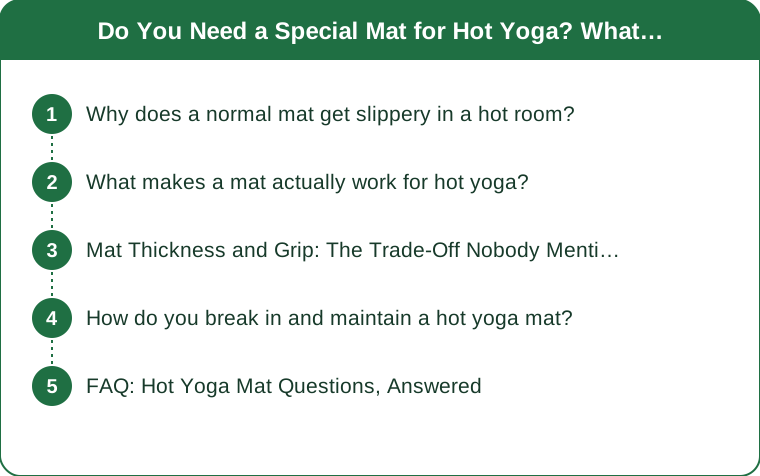
Why does a normal mat get slippery in a hot room?
Most standard PVC or rubber mats grip through surface texture — micro-ridges that catch dry skin. Sweat fills those ridges like water filling tire treads, and the texture stops doing its job.
Add humidity from a room full of sweating people, and the mat surface can hold a thin film of moisture that never fully evaporates during class. That film is what turns your downward dog into a slow slide.
What makes a mat actually work for hot yoga?
Two approaches, both effective:
1. Moisture-activated grip mats — closed-cell rubber or polyurethane surfaces engineered so grip increases as they get damp, the opposite of standard texture. These usually cost more but skip the towel entirely.
2. Mat + microfiber hot yoga towel — a towel with silicone nubs on the underside grips the mat while its top surface wicks sweat. This combo works with almost any base mat you already own, making it the cheaper fix.
Either way, avoid mats with cotton or plain fabric tops with no grip backing — they absorb sweat but do nothing to prevent sliding.

Mat Thickness and Grip: The Trade-Off Nobody Mentions
Thicker mats (6mm+) feel cushier but often perform worse in heat — more material means more surface area holding onto sweat film, and thick cushioning can make balance poses less stable when things get slick.
For hot yoga specifically, 3-4mm with a dedicated grip layer beats a thick plush mat every time. If joint comfort matters, add a thin towel rather than switching to a thicker mat.
How do you break in and maintain a hot yoga mat?
New moisture-activated mats often grip worse for the first 5-10 sessions — a factory coating needs to wear off. Don’t judge a hot yoga mat’s grip on session one.
After each class: wipe down with a diluted vinegar-water solution (skip harsh soap, which can leave a film that reduces grip) and let it air dry fully before rolling. A mat stored damp develops both odor and a slicker surface over time.
FAQ: Hot Yoga Mat Questions, Answered
Can I just use a towel over my regular mat?
Only if the towel has a grip backing (silicone nubs). A plain towel over a mat is often more slippery than the mat alone, since fabric-on-fabric can shift even when each layer alone would grip fine.
How often should you replace a hot yoga mat?
Hot yoga mats break down faster than regular ones due to sweat and frequent washing — expect 6-12 months of heavy use versus 1-2 years for a regular studio mat.
Do closed-cell mats really perform better in heat than open-cell?
Yes for hygiene and grip consistency — closed-cell surfaces don’t absorb sweat into the material, so they don’t develop the bacterial odor or long-term surface breakdown open-cell foam mats can.
TL;DR:
- Standard mats grip through texture, which fails once sweat fills the ridges
- Moisture-activated mats or a mat+microfiber towel combo solve this directly
- 3-4mm with a grip layer beats thick cushioning for hot yoga stability
- New grip mats often need 5-10 sessions to break in — don’t judge on day one
Match the mat to the room, not just the practice — the same mat that’s perfect for a cool studio flow can be a liability the moment the heater turns on.
See It in Motion
Seen here: High Waist 8” Yoga Shorts — shop similar styles on bubblelime.com
Keep Reading
This article is for general informational and styling purposes only. Fit, sizing, and product availability may vary.